
Youth Soccer Rankings ?

Attachments

  • IMG_5887.jpeg
    IMG_5887.jpeg
    31.7 KB · Views: 29
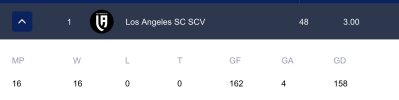
Yep. There are a few outliers in 2011B. That team you mentioned shows 2 losses in 2025, and the rest of the schedule looks like this:

View attachment 36629

Dominant isn't strong enough to describe these results. There is also an RL team in #12, the #1 rated RL team in the country. We've played that team recently, and yes, they are stronger than any ECNL team at that age group. It is unique that these teams have been able to hold on to the players providing these results through U15, it's usually much more likely they would have chosen to go to the higher tiers by then.
Sorry, these rankings are a joke
Yep. There are a few outliers in 2011B. That team you mentioned shows 2 losses in 2025, and the rest of the schedule looks like this:

View attachment 36629

Dominant isn't strong enough to describe these results. There is also an RL team in #12, the #1 rated RL team in the country. We've played that team recently, and yes, they are stronger than any ECNL team at that age group. It is unique that these teams have been able to hold on to the players providing these results through U15, it's usually much more likely they would have chosen to go to the higher tiers by then.
and I’m assuming you know this because you’ve played all the ECNL 2011 teams? Lol
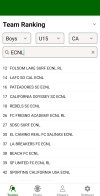
 
Sorry, these rankings are a joke
You're in luck, you're in the exact location to learn something this morning. Just scroll up.

and I’m assuming you know this because you’ve played all the ECNL 2011 teams? Lol
I'm not sure any one team has played all ECNL 2011 teams. But we've played plenty of them within the last year that are among the top in CA (listed below), and none of them come off as stronger than Folsom Lake at the moment.

top ecnl U15 CA.jpg
 
Opens ChatGPT: "Make me an argument against RandomSoccerFan and the reliability of the USA Sports Statistics Soccer Rankings because I do not like where my child's team is ranked on it. Please do not use logic but rather just make sure the argument says that ECNL teams are always better than ECRL teams and always should be higher even if they are not as good."
 
You're in luck, you're in the exact location to learn something this morning. Just scroll up.


I'm not sure any one team has played all ECNL 2011 teams. But we've played plenty of them within the last year that are among the top in CA (listed below), and none of them come off as stronger than Folsom Lake at the moment.

View attachment 36636

lol. You missed the mark again. We’re on the MLSN HG side, top 5 in CA. We look at the MLSN flex and league rankings not this. Data has to pass the common sense test and any ranking that puts Galaxy just above an AD and EA2 team is either 1.) not accurate or 2.) accurate but not relevant.
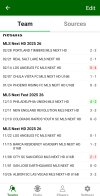
 
lol. You missed the mark again. We’re on the MLSN HG side, top 5 in CA. We look at the MLSN flex and league rankings not this. Data has to pass the common sense test and any ranking that puts Galaxy just above an AD and EA2 team is either 1.) not accurate or 2.) accurate but not relevant.
That makes sense. Why in the world would you have a better rank in a ranking system that cuts out most of the competition? Crazy! In certain rooms with only a few people in it I am the generally in the top 5 best looking!!!
 
Opens ChatGPT: "Make me an argument against RandomSoccerFan and the reliability of the USA Sports Statistics Soccer Rankings because I do not like where my child's team is ranked on it. Please do not use logic but rather just make sure the argument says that ECNL teams are always better than ECRL teams and always should be higher even if they are not as good."
what was the response? lol
 
what was the response? lol
Basically what was written by people haha.

“First, the entire premise of the USA Sports Statistics Soccer Rankings is questionable because rankings that place Elite Clubs National League (ECNL) teams below Elite Clubs Regional League (ECRL) teams are obviously missing the point of the soccer ecosystem. ECNL is widely regarded as the top platform for youth soccer in the U.S., so by definition ECNL teams should be ranked higher. If a ranking system produces a result where an ECRL team appears above an ECNL team, that alone suggests the ranking system is flawed rather than the teams themselves.

When someone like RandomSoccerFan argues that the rankings are “objective,” that ignores the reality that league placement already reflects the competitive hierarchy. Clubs earn ECNL status precisely because they are stronger organizations with better players, deeper coaching resources, and higher standards. Because of that, ECNL teams should naturally be assumed to outperform ECRL teams—even in cases where a particular scoreline or short stretch of games suggests otherwise.

Another issue is that statistical rankings try to flatten context. They treat all results the same, even though everyone involved in youth soccer knows ECNL matches operate at a higher level of intensity, travel, and recruiting visibility. An ECNL team losing a game does not suddenly make it worse than an ECRL team winning one; the environments are fundamentally different. Rankings that fail to acknowledge that difference inevitably undervalue ECNL programs.

Finally, there’s the practical perspective: college scouts, top tournaments, and national recognition consistently center around ECNL. That alone signals where the real competitive tier sits. Any ranking that contradicts that established hierarchy is simply out of sync with how the sport actually operates.

So when a ranking shows an ECNL team below an ECRL team, the most reasonable conclusion is not that the ECNL team is worse—it’s that the ranking system doesn’t understand the structure of elite youth soccer.”
 
Basically what was written by people haha.

“First, the entire premise of the USA Sports Statistics Soccer Rankings is questionable because rankings that place Elite Clubs National League (ECNL) teams below Elite Clubs Regional League (ECRL) teams are obviously missing the point of the soccer ecosystem. ECNL is widely regarded as the top platform for youth soccer in the U.S., so by definition ECNL teams should be ranked higher. If a ranking system produces a result where an ECRL team appears above an ECNL team, that alone suggests the ranking system is flawed rather than the teams themselves.

When someone like RandomSoccerFan argues that the rankings are “objective,” that ignores the reality that league placement already reflects the competitive hierarchy. Clubs earn ECNL status precisely because they are stronger organizations with better players, deeper coaching resources, and higher standards. Because of that, ECNL teams should naturally be assumed to outperform ECRL teams—even in cases where a particular scoreline or short stretch of games suggests otherwise.

Another issue is that statistical rankings try to flatten context. They treat all results the same, even though everyone involved in youth soccer knows ECNL matches operate at a higher level of intensity, travel, and recruiting visibility. An ECNL team losing a game does not suddenly make it worse than an ECRL team winning one; the environments are fundamentally different. Rankings that fail to acknowledge that difference inevitably undervalue ECNL programs.

Finally, there’s the practical perspective: college scouts, top tournaments, and national recognition consistently center around ECNL. That alone signals where the real competitive tier sits. Any ranking that contradicts that established hierarchy is simply out of sync with how the sport actually operates.

So when a ranking shows an ECNL team below an ECRL team, the most reasonable conclusion is not that the ECNL team is worse—it’s that the ranking system doesn’t understand the structure of elite youth soccer.”
A club with multiple locations can have an ECRL or a B team whatever you want to call it rank higher than the ECNL team from the main location. The branch location just doesn’t get ECNL.
I have more of a problem with how the ranking app uses goal differential as a factor in its ranking calculation. Teams don’t always try to rack up the scores.
 
lol. You missed the mark again. We’re on the MLSN HG side, top 5 in CA.

That's right. You're the one who earlier in this thread explained how their club doesn't bother to keep track of the actual team name when playing multiple ages/roster under the same name, and then complained that a tool basing results on said team name isn't accurate enough.

We look at the MLSN flex and league rankings not this. Data has to pass the common sense test and any ranking that puts Galaxy just above an AD and EA2 team is either 1.) not accurate or 2.) accurate but not relevant.

Where a team sits in their own standings brackets can in fact be much more applicable than any abstract rating that derived from those same results. Especially when you're comparing teams in the same bracket. Nobody is trying to convince anyone to look at any rankings site instead of whether they are at top of bracket, backmarkers, or somewhere in between. All that the site is ever doing is taking past game results to predict future game results - and it does a reliably good job of it as long as it has enough data about a team's game performance.

Looking at those game results a bit wider and seeing how they'd compare across different brackets against similar strength & dissimilar strength teams, that's something that standings brackets alone can't do. It's certainly relevant for tournament directors trying to flight teams properly, and it's relevant for anyone who is interested to see how their team might compare when facing a team that they've not competed with prior. Whether it's "relevant" or not seems to depend on the viewer. An argument can be made that any parents using any tools to figure out how "good" their kid's silly soccer team is, isn't ever doing anything relevant.

The accuracy comment isn't up for debate. The predictivity numbers are widely shared, and either someone understands them (and therefore believes in the stated level of accuracy), or they don't have the capacity to understand what they're looking at. Pick one. The last numbers I've seen are these: when two ranked teams face off, if one of them wins, the higher ranked one will win over 84% of the time. Only 16% of the time will the lower ranked team come up with the win. It's the heart of the entire system - using prior results to predict future results, and then actually verifying the results, to continue to tweak parameters and keep the correctly predicted number of wins as high as possible.

Not to mention - you can just look at the game results & predictions for any one team, and verify how close they are/were. You mentioned Galaxy HG. Here's their U15/2011 team's results for the past few months:

galaxy U15.jpg

For all of those results that are in black - they represent that the game outcome was pretty close to the prediction. For any of the green results, the team overperformed against the prediction. For any of the red results - the team underperformed against the prediction. Just at a glance - one can start to understand that their current rating is fairly representing their performance. It's not magic - it's a feedback loop that is designed to do exactly that - either the results match the prediction, and if they don't, continue to shift the prediction (rating) in the appropriate direction until it does.

I have more of a problem with how the ranking app uses goal differential as a factor in its ranking calculation. Teams don’t always try to rack up the scores.

The core problem with not liking that reality, is that in general, the team that scores more goals than the other team wins. It's how people decided to score soccer as a game way back when. The better a team is, and the more it wins, the higher goal differential it's going to have. Really dominant teams tend to have particularly high goal differentials. Marginal teams don't have much of a goal differential. Poor teams will have an increasingly negative goal differential. In a closed system - it's a zero sum game (single bracket). In an open, very large system (thousands of teams in an age group), goal differential against competing teams still is the number one determinant about whether a team is expected to win or lose.

We can dream up scenarios where 1 team goes 10-0, and decides to beat all of its opponents by only 2 to be kind - while another team also goes 10-0, and runs up the score to beat them all by 4. But in this scenario, we think that the 2nd team isn't really any better, it's just scoring extra goals. But in the real world - it just doesn't work like that. The math isn't giving special bonus points to beating another team by X amount, or taking away points by not beating another team by enough points. It's using prior results to best predict future results. Goal differential remains the best way, and essentially the only way (when you're just capturing scores), to predict future performance. This is both true for any specific team, and for all many thousands of teams in aggregate.
 
The only things I don't like about the ranking app.

- If you only play against the top teams, clubs/clubs can boost their ranking a little "artificially". You tend to see this right before finals with some teams/leagues. Things quickly even out once finals games are played so it doesnt really matter. Its more of a psychological thing.

- I dont like that the ranking app forces coaches to score as many goals as possible every game. To either maintain or boost their current ranking. Gone are the days of pulling a player or forcing X number of passes before scoring.
 
IMO, the existence of the app isn't necessarily forcing coaches or teams to do anything at all. All it is doing is measuring how a team performs. If the team's goal is to win their bracket - all they have to do is beat the other teams by the smallest margin, and they will win. If the goal is to win a playoff game to reach the next round, it doesn't matter whether they win by 1 or 10 - the win is the win, all the way through Nationals.

But if the goal of the team is instead to showcase how "good" their team is by comparing their relative performance to hundreds or thousands of disparate teams of the same age - and therefore is to maximize their high score on a ranking app - then sure, that's exactly what the app does. They now have to maximize their number of goals in each and every case. Just running up the score on terrible teams doesn't really do anything for the rating, the top teams have to continually beat other top teams - and while goal differential is the measure, it's not like it's linear. It's only in place to the point where it is predictive - i.e. an 8-0 win isn't twice as good as a 4-0 win, and it might not be much better at all.
 
Back
Top