
Even I had to <<chuckle>> at that one." As everyone knows, I am an extraordinarily brilliant person,"
Heh,

You are using an out of date browser. It may not display this or other websites correctly.
You should upgrade or use an alternative browser.
You should upgrade or use an alternative browser.
Today in Fascism
- Thread starter Hüsker Dü
- Start date
kickingandscreaming
PREMIER
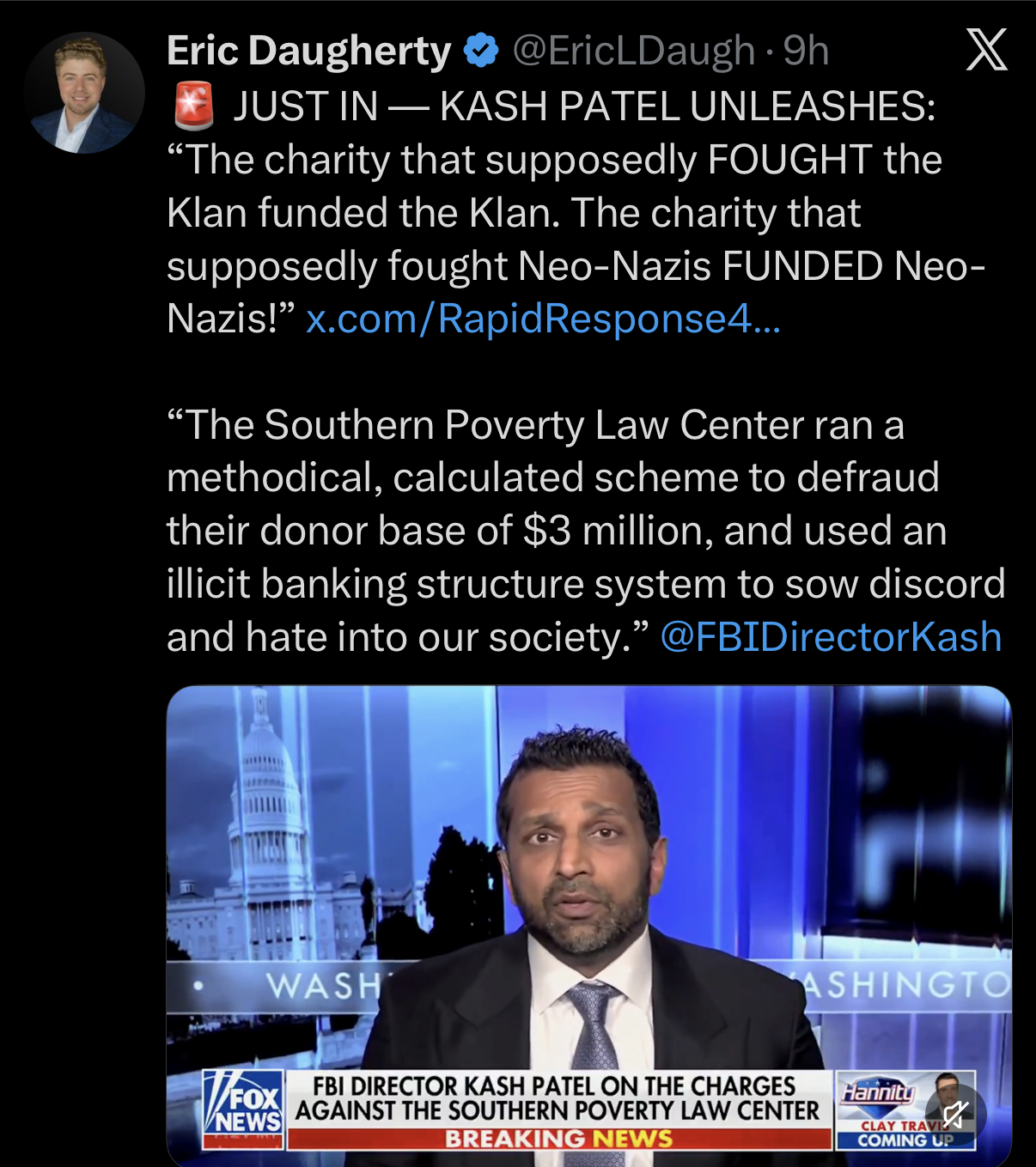
Thanks Barry
kickingandscreaming
PREMIER

kickingandscreaming
PREMIER
Whatever anyone thinks of Secretary Kennedy personally, it only takes an ounce of critical thinking to realize he was easily better for the American people than the prior regime and his questioning of the Biden era COVID / medical experts, was EXACTLY what was needed to begin the long, painful, task of repairing the reputational damage that the Left had inflicted on American health care.Joe said the unvaxxed would die. Actually, the vaxxed died. Those who said no got fired.
kickingandscreaming
PREMIER
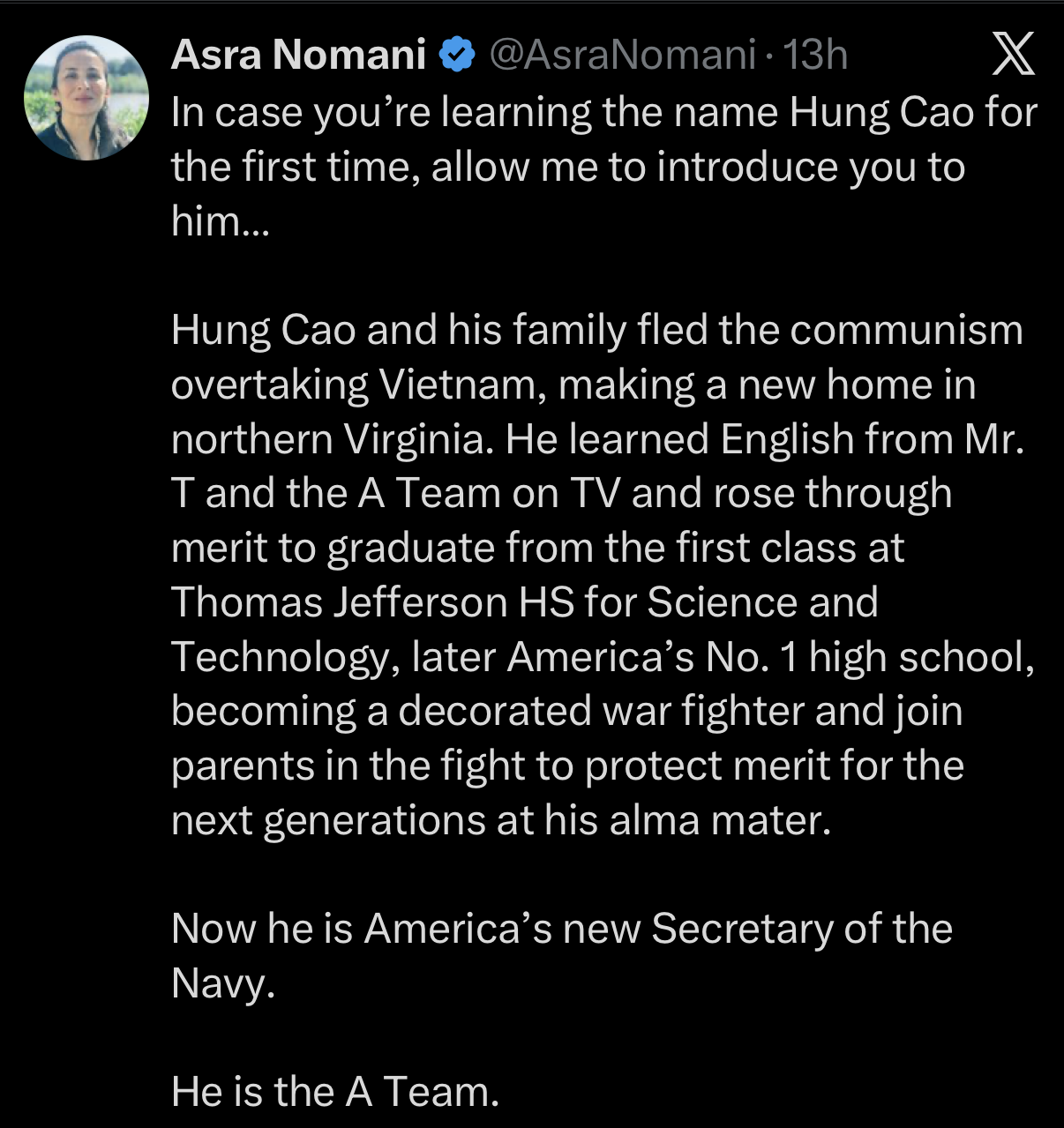
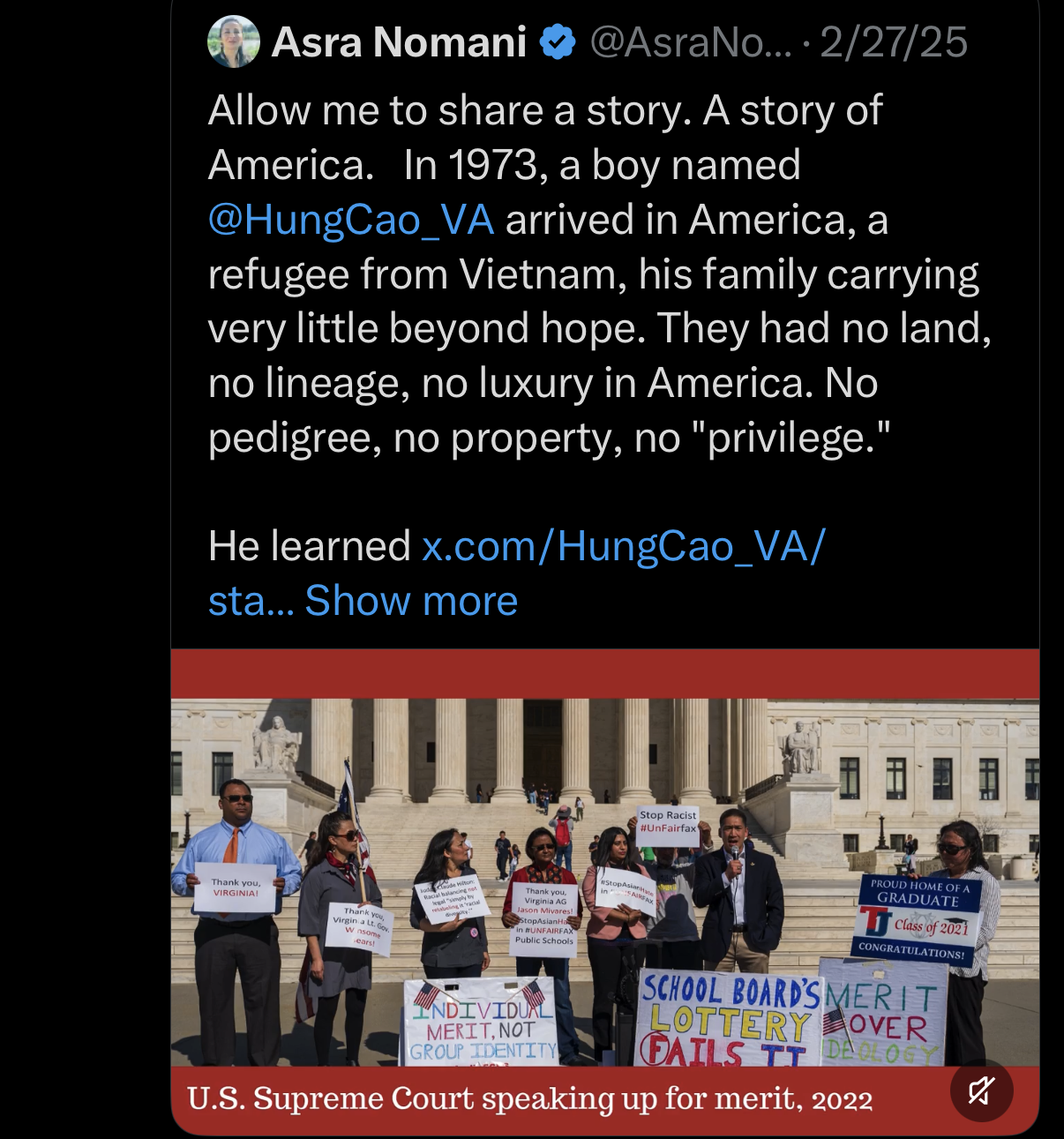
Not all immigrants are created equally.
< full story >

 x.com
x.com
< full story >
Asra Nomani (@AsraNomani) on X
In case you’re learning the name Hung Cao for the first time, allow me to introduce you to him… Hung Cao and his family fled the communism overtaking Vietnam, making a new home in northern Virginia. He learned English from Mr. T and the A Team on TV and rose through merit to graduate from the firs…
kickingandscreaming
PREMIER
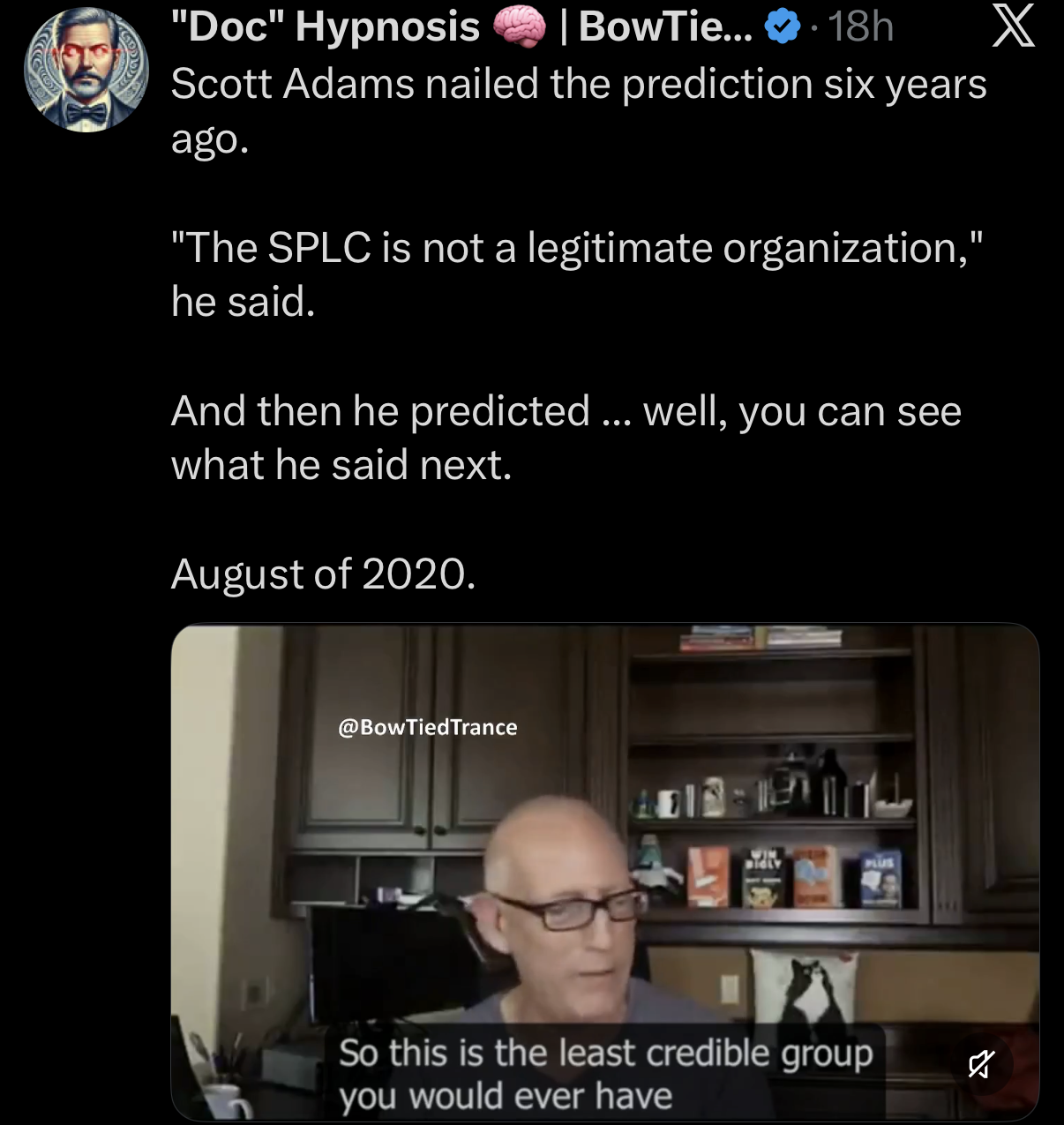
Scott Adams saw what the SPLC was in 2020. Again, anyone capable of critical thinking and not under the spell of TDS could see the same. Tweedle Dumb on here has no comment on this as he spends his time parsing lies from his discredited COVID “experts”.
kickingandscreaming
PREMIER
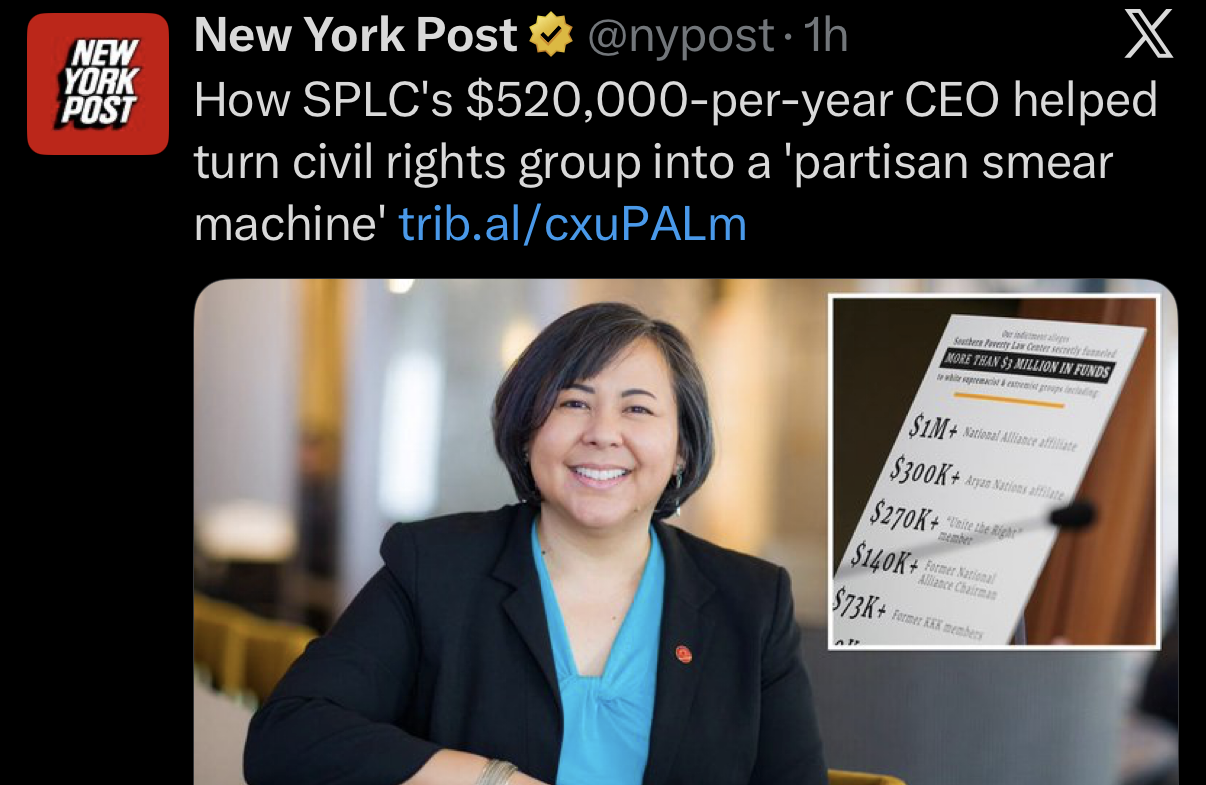
It’s always good to put a face to the name of the fascist foot soldiers - Margaret Huang.
 x.com
x.com
New York Post (@nypost) on X
How SPLC's $520,000-per-year CEO helped turn civil rights group into a 'partisan smear machine' https://t.co/fZ6PJQik8Y

Hüsker Dü
DA
So project warp speed was a failure?Pfizer has admitted that they didn't test the vaccine for prevention of the virus. A fact that they apparently didn't hide, but it didn't stop politicians and many media outlets from claiming it did. The claim was used as the basis for requiring vaccinations for certain jobs and certain public activities.
kickingandscreaming
PREMIER
More parsing of lies. Guess the new talking points about the SPLC hasn’t filtered down to his “level” yet. Get ready for another ChatGPT screed.


Hung was also the one who recoverred the bodies of JFK Jr and wifeyNot all immigrants are created equally.
View attachment 37658
View attachment 37659
< full story >
Asra Nomani (@AsraNomani) on X
In case you’re learning the name Hung Cao for the first time, allow me to introduce you to him… Hung Cao and his family fled the communism overtaking Vietnam, making a new home in northern Virginia. He learned English from Mr. T and the A Team on TV and rose through merit to graduate from the firs…

Here's the whole criminal syndicate laid out:It’s always good to put a face to the name of the fascist foot soldiers - Margaret Huang.
View attachment 37661
New York Post (@nypost) on X
How SPLC's $520,000-per-year CEO helped turn civil rights group into a 'partisan smear machine' https://t.co/fZ6PJQik8Y
Antifa = military wing.
Media = propaganda wing.
ACT Blue = laundering wing.
SPLC/ADL = targeting wing.
Hollywood = indoctrination wing.
Soros NGOs = financial wing.
Epstein = blackmail wing.
Judiciary = lawfare wing.
It's ALL connected.
Hüsker Dü
DA
The Mussolini Method—and the Moment the Mask Melts
From the Phantom Press .org of Molly Ivins - Dispatches from the Hereafter, with Hellfire & Humor
Y’all ever notice how history doesn’t repeat itself so much as it sidles up beside you, tips its hat, and says,
“Don’t I look familiar?”
There’s a reason folks keep invoking Benito Mussolini—and it ain’t just because it rolls off the tongue nice and easy.
And it ain’t just because of the dictator business either.
No, darlin’, it runs deeper than that. It’s the pattern.
See, when people talk about the bad old days, they tend to focus on the headline monsters—the big, terrifying, ideologically committed ones.
But Mussolini? He wasn’t built like that.
He was a grifter.
He was a hustler.
Not some grand architect of ideology—nay, nay. Benito was a political opportunist who saw a country wobbling—economic chaos, unemployment, wounded pride after World War I—and decided that was his moment to sell something mighty attractive:
Not solutions. Salvation.
Italy was, in a word, a mess—folks mad enough to chew nails.
Mussolini didn’t fix any of that.
He used it.
Wrapped himself in the flag, handed the public a list of people to blame, and promised to make everything “great again” if they’d just hand him the keys.
Sound familiar?
He fed the anger, named the enemies, and sold the cure.
Now here’s where folks need to stop nodding politely and start connecting dots.
Because once Mussolini got in, he didn’t flip a switch and become a dictator overnight.
He worked in increments.
He didn’t shut down the press—he made ownership contingent on loyalty. By the mid-1920s, every major paper either belonged to the state or to businessmen who understood exactly where their bread was buttered.
Stories softened.
Criticism thinned.
Truth got… negotiable.
Sound like a system where media consolidation, billionaire ownership, and political alignment start blurring lines until nobody’s quite sure where journalism ends and messaging begins?
Good.
Stay with me.
Then he moved on to higher education.
In 1931, professors had to sign loyalty oaths.
Only eleven refused out of 1,200.
Not because the rest were true believers—but because careers, funding, and entire institutions were on the line.
Now take a look around today:
• Universities pressured or financially squeezed when they don’t toe the line
• Faculty and students facing backlash for dissent
• Administrations choosing quiet compliance over open conflict
Different tools.
Same pressure.
And then—because this is always the next move—comes the foreign stage.
Mussolini engineered a crisis with Ethiopia to justify war.
Not because Italy needed it.
Because he needed it.
Needed a win.
Needed a distraction.
Needed to change the subject.
Because war—small or large—has a way of resetting the conversation.
Suddenly you’re not the man who fumbled the economy—
You’re the strongman defending the nation.
Now let’s not pretend modern geopolitics is identical.
It never is.
But the rhythm?
The sequencing?
That hasn’t changed in a hundred years.
Economic instability.
Control the narrative.
Pressure institutions.
Stir conflict abroad.
Wrap it all in patriotism.
Same song. New band.
But here’s the part that ought to give people a little steel in their spine:
It didn’t hold.
By 1943, Mussolini wasn’t feared—
He was finished.
His approval cratered.
His own cabinet voted him out.
The king had him arrested.
The very institutions he thought he had bent to his will—military, government, leadership—looked around, saw the writing on the wall, and chose survival over loyalty.
We shan’t mention the fate of Signor Mussolini.
And if you think that kind of unraveling can’t start quietly, you haven’t been paying attention.
Because right now, in plain sight:
• Courts—including ones stocked by the very administration in question—are blocking overreach
• Universities are pushing back instead of folding wholesale
• Businesses are resisting policies that threaten their own survival
• Journalists—especially independent ones—are digging harder, not softer
• Public approval is sliding, not strengthening
That’s not total control.
That’s friction. That’s the system grinding against the gears someone tried to lock in place.
And here’s the truth authoritarian types never quite account for:
You can bully a system for a while.
You can scare people into silence for a season.
You can even convince a country you’re inevitable.
But you cannot make everyone comply.
And you don’t need everyone to stop you. You just need enough.
Enough judges who won’t bend.
Enough reporters who won’t bury it.
Enough educators who won’t sign.
Enough citizens who won’t look away.
Because collapse doesn’t start with a bang. It starts with resistance that refuses to go quiet.
And when it comes? It comes fast.
So if this all feels familiar—good. That means you’re paying attention.
And if you’re waiting for some grand, cinematic moment where someone else steps in and fixes it—don’t.
That’s not how this works.
This part of the story? It belongs to the people who stay loud when it’s inconvenient…who stay visible when it’s uncomfortable…who stay engaged when it’s exhausting.
Because history doesn’t hand you a different ending.
It hands you the pen.
It hands you the phone.
It hands you the ballot.
It hands you the opportunity.
And it does not care one whit whether you feel tired, discouraged, or outnumbered.
So don’t you sit there waiting for someone else to write the ending.
Don’t you go quiet just when the pressure starts to work.
Move your keister.
Make the call.
Tell the truth.
Show up.
_______________
- The Ghost of Molly Ivins (as channeled by Samantha Marti Parisi)
From the Phantom Press .org of Molly Ivins - Dispatches from the Hereafter, with Hellfire & Humor
Y’all ever notice how history doesn’t repeat itself so much as it sidles up beside you, tips its hat, and says,
“Don’t I look familiar?”
There’s a reason folks keep invoking Benito Mussolini—and it ain’t just because it rolls off the tongue nice and easy.
And it ain’t just because of the dictator business either.
No, darlin’, it runs deeper than that. It’s the pattern.
See, when people talk about the bad old days, they tend to focus on the headline monsters—the big, terrifying, ideologically committed ones.
But Mussolini? He wasn’t built like that.
He was a grifter.
He was a hustler.
Not some grand architect of ideology—nay, nay. Benito was a political opportunist who saw a country wobbling—economic chaos, unemployment, wounded pride after World War I—and decided that was his moment to sell something mighty attractive:
Not solutions. Salvation.
Italy was, in a word, a mess—folks mad enough to chew nails.
Mussolini didn’t fix any of that.
He used it.
Wrapped himself in the flag, handed the public a list of people to blame, and promised to make everything “great again” if they’d just hand him the keys.
Sound familiar?
He fed the anger, named the enemies, and sold the cure.
Now here’s where folks need to stop nodding politely and start connecting dots.
Because once Mussolini got in, he didn’t flip a switch and become a dictator overnight.
He worked in increments.
He didn’t shut down the press—he made ownership contingent on loyalty. By the mid-1920s, every major paper either belonged to the state or to businessmen who understood exactly where their bread was buttered.
Stories softened.
Criticism thinned.
Truth got… negotiable.
Sound like a system where media consolidation, billionaire ownership, and political alignment start blurring lines until nobody’s quite sure where journalism ends and messaging begins?
Good.
Stay with me.
Then he moved on to higher education.
In 1931, professors had to sign loyalty oaths.
Only eleven refused out of 1,200.
Not because the rest were true believers—but because careers, funding, and entire institutions were on the line.
Now take a look around today:
• Universities pressured or financially squeezed when they don’t toe the line
• Faculty and students facing backlash for dissent
• Administrations choosing quiet compliance over open conflict
Different tools.
Same pressure.
And then—because this is always the next move—comes the foreign stage.
Mussolini engineered a crisis with Ethiopia to justify war.
Not because Italy needed it.
Because he needed it.
Needed a win.
Needed a distraction.
Needed to change the subject.
Because war—small or large—has a way of resetting the conversation.
Suddenly you’re not the man who fumbled the economy—
You’re the strongman defending the nation.
Now let’s not pretend modern geopolitics is identical.
It never is.
But the rhythm?
The sequencing?
That hasn’t changed in a hundred years.
Economic instability.
Control the narrative.
Pressure institutions.
Stir conflict abroad.
Wrap it all in patriotism.
Same song. New band.
But here’s the part that ought to give people a little steel in their spine:
It didn’t hold.
By 1943, Mussolini wasn’t feared—
He was finished.
His approval cratered.
His own cabinet voted him out.
The king had him arrested.
The very institutions he thought he had bent to his will—military, government, leadership—looked around, saw the writing on the wall, and chose survival over loyalty.
We shan’t mention the fate of Signor Mussolini.
And if you think that kind of unraveling can’t start quietly, you haven’t been paying attention.
Because right now, in plain sight:
• Courts—including ones stocked by the very administration in question—are blocking overreach
• Universities are pushing back instead of folding wholesale
• Businesses are resisting policies that threaten their own survival
• Journalists—especially independent ones—are digging harder, not softer
• Public approval is sliding, not strengthening
That’s not total control.
That’s friction. That’s the system grinding against the gears someone tried to lock in place.
And here’s the truth authoritarian types never quite account for:
You can bully a system for a while.
You can scare people into silence for a season.
You can even convince a country you’re inevitable.
But you cannot make everyone comply.
And you don’t need everyone to stop you. You just need enough.
Enough judges who won’t bend.
Enough reporters who won’t bury it.
Enough educators who won’t sign.
Enough citizens who won’t look away.
Because collapse doesn’t start with a bang. It starts with resistance that refuses to go quiet.
And when it comes? It comes fast.
So if this all feels familiar—good. That means you’re paying attention.
And if you’re waiting for some grand, cinematic moment where someone else steps in and fixes it—don’t.
That’s not how this works.
This part of the story? It belongs to the people who stay loud when it’s inconvenient…who stay visible when it’s uncomfortable…who stay engaged when it’s exhausting.
Because history doesn’t hand you a different ending.
It hands you the pen.
It hands you the phone.
It hands you the ballot.
It hands you the opportunity.
And it does not care one whit whether you feel tired, discouraged, or outnumbered.
So don’t you sit there waiting for someone else to write the ending.
Don’t you go quiet just when the pressure starts to work.
Move your keister.
Make the call.
Tell the truth.
Show up.
_______________
- The Ghost of Molly Ivins (as channeled by Samantha Marti Parisi)
100%. You losers sure tried to get crush to comply to wear mask, stay in 6 foot circle, wash hands and take all poison jabsBut you cannot make everyone comply.


The Liars Club
Heads need to roll..
 What Ron Johnson disclosed to RFK JR about the COVID Vaccines should put a LOT of people in prison for the rest of their lives, or worse
• They HID myocarditis signals
• They HID stroke signals
“Safety signals were screaming at us!”
“But what is most alarming— Dr. Peter Marks was made aware on March 26, 2021 that the inventors of the algorithm that analyzes the VAERS data was going to MASK adverse events— there are a bunch of people involved in this COVER-UP who still work within HHS, CDC, and FDA.” — Subpoenas incoming.
https://rumble.com/v78w61q-they-hid...-events-and-tried-to-mask-the-vaers-data.html
Heads need to roll..
What Ron Johnson disclosed to RFK JR about the COVID Vaccines should put a LOT of people in prison for the rest of their lives, or worse• They HID myocarditis signals
• They HID stroke signals
“Safety signals were screaming at us!”
“But what is most alarming— Dr. Peter Marks was made aware on March 26, 2021 that the inventors of the algorithm that analyzes the VAERS data was going to MASK adverse events— there are a bunch of people involved in this COVER-UP who still work within HHS, CDC, and FDA.” — Subpoenas incoming.
https://rumble.com/v78w61q-they-hid...-events-and-tried-to-mask-the-vaers-data.html
Hüsker Dü
DA
One could say from recent events that Trump has been able to withstand the kind of scandals that would have sunk anyone else's political career. He's a convicted felon, an adjudicated rapist, a con man who ran a fake charity and university, a notorious womanizer who cheated on all of his 3 wives, a failed business man who bankrupted all of his casinos, and a glutenous grifter who has amassed a fortune as president.
While he has promised prosperity during his tenure, all we have seen are ruinous policies such as his tariffs, rising costs on groceries, pains at the pump, and disruption of the world peace through his war on Iran. Amazingly, this hasn't affected Trump's perception of himself. It's as if he's riding proudly in a golden carriage among the poor and homeless oblivious to what is actually surrounding him. This isn't leadership, it's cognitive dissonance. One of the campaign slogans that were used when he was running for his second term was he can fix it. Well if this is fixing it I'd hate to see what breaking it would be like. At this point it looks like the only ones who are going to fix this will be the voters at the mid terms.
He and his delusional flock.
While he has promised prosperity during his tenure, all we have seen are ruinous policies such as his tariffs, rising costs on groceries, pains at the pump, and disruption of the world peace through his war on Iran. Amazingly, this hasn't affected Trump's perception of himself. It's as if he's riding proudly in a golden carriage among the poor and homeless oblivious to what is actually surrounding him. This isn't leadership, it's cognitive dissonance. One of the campaign slogans that were used when he was running for his second term was he can fix it. Well if this is fixing it I'd hate to see what breaking it would be like. At this point it looks like the only ones who are going to fix this will be the voters at the mid terms.
He and his delusional flock.
TDSOne could say from recent events that Trump has been able to withstand the kind of scandals that would have sunk anyone else's political career. He's a convicted felon, an adjudicated rapist, a con man who ran a fake charity and university, a notorious womanizer who cheated on all of his 3 wives, a failed business man who bankrupted all of his casinos, and a glutenous grifter who has amassed a fortune as president.
While he has promised prosperity during his tenure, all we have seen are ruinous policies such as his tariffs, rising costs on groceries, pains at the pump, and disruption of the world peace through his war on Iran. Amazingly, this hasn't affected Trump's perception of himself. It's as if he's riding proudly in a golden carriage among the poor and homeless oblivious to what is actually surrounding him. This isn't leadership, it's cognitive dissonance. One of the campaign slogans that were used when he was running for his second term was he can fix it. Well if this is fixing it I'd hate to see what breaking it would be like. At this point it looks like the only ones who are going to fix this will be the voters at the mid terms.
He and his delusional flock.

It's part of the Satanic Ritual. Wear a mask, stay in 6 feet circle and wash your hands. Its as easy as 1, 2 and 3. After you participate, you go get in line wearing your mask and then they & them put poison in your body. If you obeyed, you kept your job and your kids can go to their grooming colleges.Washing hands... yeah, that sounds like a conspiracy theory to me