

Look what the big crime wave did the last 30 days. It manipulated high prices before election to high as possible. Why? To screw us all and blame Trump and Iran war. GDP was lied about at 3.4 when it was really 4.3. Plus, they & them cheated again. Why? Fraud, stealing our money and, and the worst of the worst in this criminal cartel are kid hunters and Satanic Ritual Abusers. This kind of evil costs trillions to operate. Its horrible. Our tax dollars paid people to transport children in tunnells and ship cantainers to filthy fucking elite Pedos in America!!!Envious, authoritarian, misanthropes leading guilt-ridden, delusional sheep.

You are using an out of date browser. It may not display this or other websites correctly.
You should upgrade or use an alternative browser.
You should upgrade or use an alternative browser.
Today in Fascism
- Thread starter Hüsker Dü
- Start date


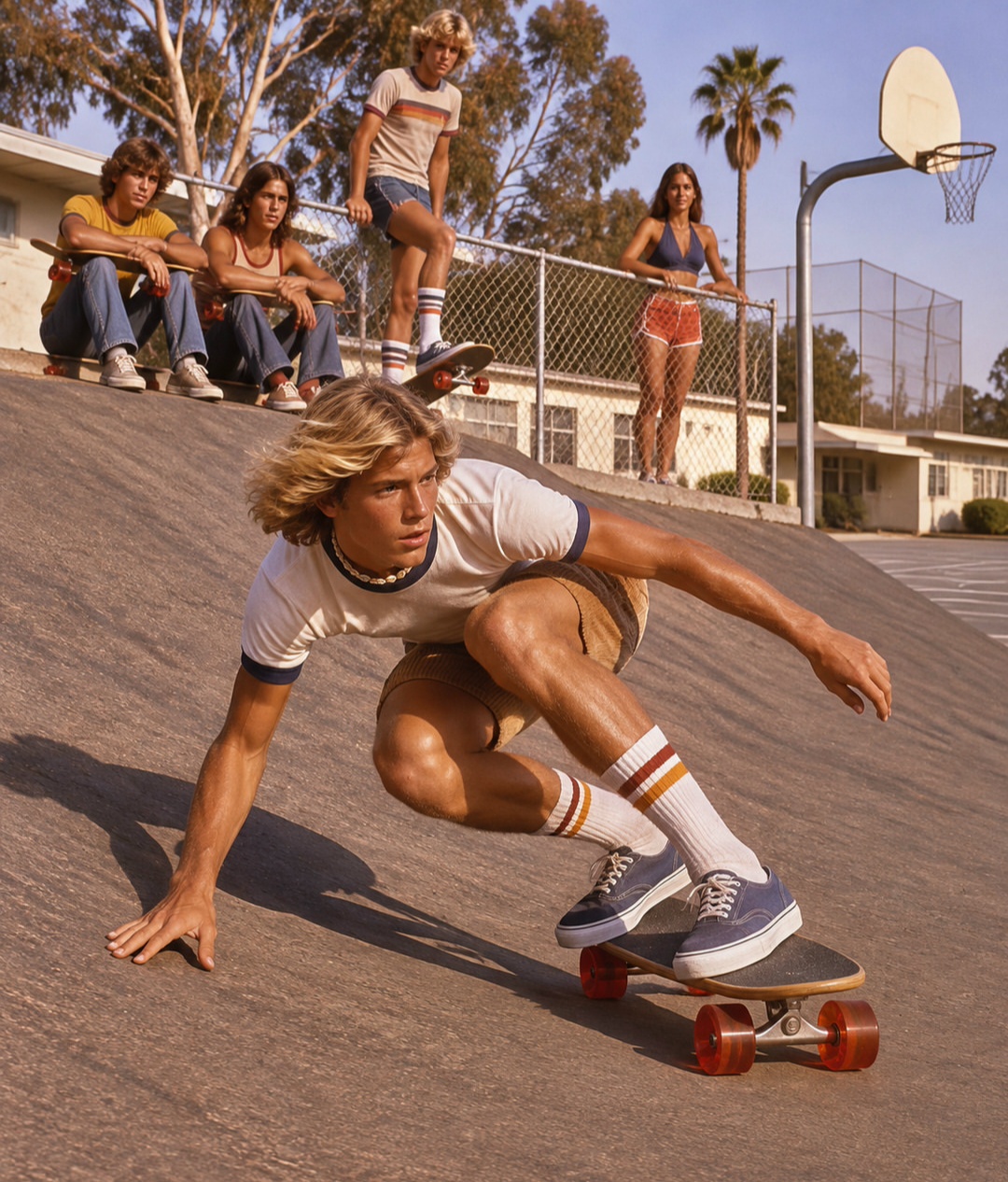
Cool pic. However, reverse pivot trucks weren't a thing in the 70's.Oh wow, look what I found. Not only was I New Wave Dave, but I was also Skater Dave
Ya Bruh
View attachment 42557
kickingandscreaming
PREMIER
As well said as possible.

Bruddah IZ
DA
My Friend
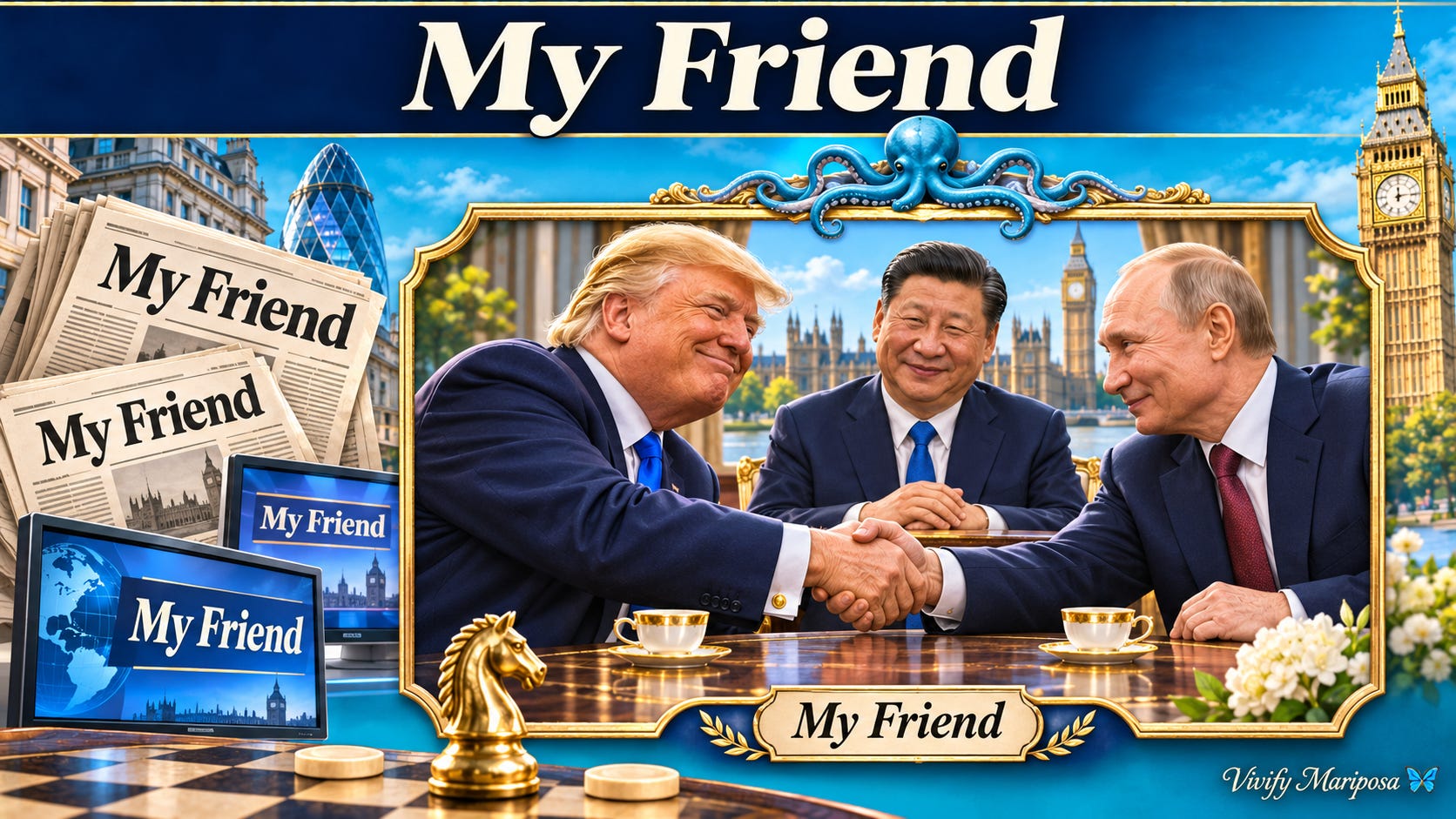
After the meeting Trump posted the photograph of himself shaking hands with Putin, and the caption was two words, “My Friend.” London’s newspapers have been repeating those two words ever since, as if repeating them made them smaller, and every time they repeat them they announce again that the three powers are talking without London.The chorus arrived on schedule. The Senate Democratic leader posted that Putin’s friendship was “embarrassing, despicable, and quite frankly pathetic” and promised that Senate Democrats “will always stand with Ukraine.” A Democratic senator said she does not understand the President’s “admiration and cozying up” to a “war criminal.” The deputy leader of Reform UK, the party sold to Britain as the rebels against the establishment, called it “a grave mistake” and “wrong at every level.” The Prime Minister of Poland said Putin “is not our friend and will never be.” Washington’s opposition, Britain’s so-called populists and Warsaw’s government delivered the same paragraph within days, in different voices.
Asked about it, Trump said, “I can’t speak to America. I have fantastic relationships with Putin, that’s a very good thing.” His director of national intelligence went on two Sunday shows and explained the language for anyone willing to listen. “Getting the three nuclear powers together and getting them to agree that they are not going to escalate, that they are going to communicate, that is historic,” he said, and when he was pressed on the word itself, he answered, “In different contexts, you can use different words.” In the circle of that conversation, he said, using the term “friend” is entirely appropriate.
The same director was asked about the string of technology outages across the country, the seven systems that failed in six days that I recorded in Issue 25, and he said Americans should expect more disruptions as companies and government agencies replace aging systems, “glitches, gaps, interruptions in service,” as part of the upgrade. London’s newspaper buried that answer under the “friend” story.
Bruddah IZ
DA
Sure doesn't feel like a mid-term victory for a Flock of Lame Ducks. They stand for Ukraine but not for America.My Friend
After the meeting Trump posted the photograph of himself shaking hands with Putin, and the caption was two words, “My Friend.” London’s newspapers have been repeating those two words ever since, as if repeating them made them smaller, and every time they repeat them they announce again that the three powers are talking without London.
The chorus arrived on schedule. The Senate Democratic leader posted that Putin’s friendship was “embarrassing, despicable, and quite frankly pathetic” and promised that Senate Democrats “will always stand with Ukraine.” A Democratic senator said she does not understand the President’s “admiration and cozying up” to a “war criminal.” The deputy leader of Reform UK, the party sold to Britain as the rebels against the establishment, called it “a grave mistake” and “wrong at every level.” The Prime Minister of Poland said Putin “is not our friend and will never be.” Washington’s opposition, Britain’s so-called populists and Warsaw’s government delivered the same paragraph within days, in different voices.
Asked about it, Trump said, “I can’t speak to America. I have fantastic relationships with Putin, that’s a very good thing.” His director of national intelligence went on two Sunday shows and explained the language for anyone willing to listen. “Getting the three nuclear powers together and getting them to agree that they are not going to escalate, that they are going to communicate, that is historic,” he said, and when he was pressed on the word itself, he answered, “In different contexts, you can use different words.” In the circle of that conversation, he said, using the term “friend” is entirely appropriate.
The same director was asked about the string of technology outages across the country, the seven systems that failed in six days that I recorded in Issue 25, and he said Americans should expect more disruptions as companies and government agencies replace aging systems, “glitches, gaps, interruptions in service,” as part of the upgrade. London’s newspaper buried that answer under the “friend” story.
Bruddah IZ
DA
The Spy Who Was Invited Back
The scandal arrived three weeks before Shenzhen, the way these stories always arrive, without a name attached. On October 29 an American newspaper reported, citing people briefed on classified surveillance, that a Chinese executive at a Singapore data center company, Alice Huang, no relation, was a Chinese intelligence asset who had built a close relationship with Jensen Huang, the man who ran Nvidia for thirty-three years, the man who flew to Beijing with Trump in May and spent three years telling Washington to let American chips be sold in China. Classified surveillance does not walk into a newsroom by itself, and it walked in five days before the midterm. The President says he was told about the woman months earlier, in May. Somebody else decided the public should hear it in the last week of October.On November 4 the chairmen of three House committees, Foreign Affairs, the China committee and Intelligence, wrote to Huang asking him to appear at a closed-door briefing, and the date they chose was November 18, the day the President landed in Shenzhen. Their letter calls the woman a “publicly reported” Chinese intelligence asset. Publicly reported by whom? By the newspaper that printed the leak. The unnamed source becomes the newspaper, the newspaper becomes the public record, and the public record becomes the reason for the letter, and one anonymous voice has been repeated until it sounds like a verdict.
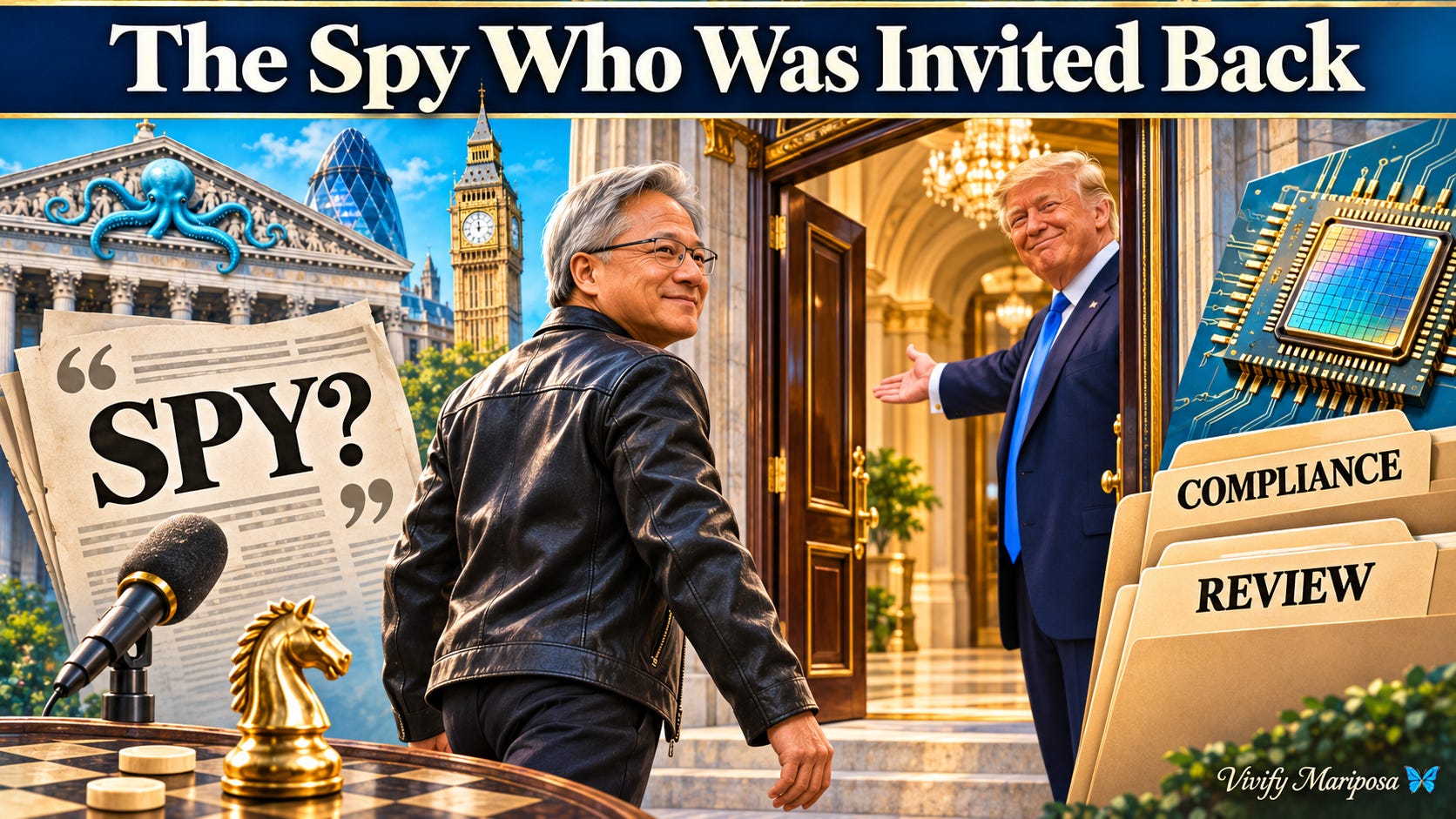
On November 8 Nvidia’s board opened an independent investigation and wrote that it had “no reason to believe that either national security or NVIDIA secrets were compromised” and that it “has confidence in Jensen and his leadership team.” The same day Huang sent his employees an email apologizing for his personal conduct, because by then the spy story had become an affair story, and an affair needs no evidence of espionage to end a career. Three days later the board accepted his resignation, and the announcement on November 12 gave no reason at all.
The Treasury Secretary went on television the next morning and said “the real story here should be: Did Nvidia know their client,” whether the company had made sure it was not selling to “what were obviously pass-through shell companies,” and he blamed the Commerce Department for not putting the Singapore company on the export blacklist. This Sunday he said it again on national television, “We do need to see who was in charge of compliance there.” Compliance is a word about paperwork and customers, and nobody in the cabinet reached for the word spy. The President said he “would not mind” seeing Huang reinstated because “he learned a big lesson,” and on his way to Asia he explained why the chip fight would wait: “we’re heading to China, and I don’t think you want to insult China just before you get there.” When Nvidia’s board created a committee to oversee national security and export controls, he called it “a good idea.” On Friday he said he would like Huang to apologize and return.
You do not invite a compromised man back to run the most valuable chip company on earth. The board said it had no reason to believe anything was compromised, the cabinet talks about compliance, the President wants him back, and only the anonymous voices still say spy. In country after country I have shown how the accusation of fraud removes the politician before one piece of evidence is tested in a courtroom, and here the label of spy removed the businessman who was the bridge between American chips and the Chinese market a week before the meeting that put Washington, Moscow and Beijing at one table. In Shenzhen, seated across from Xi, the President had just thanked his host when a reporter shouted the question they had been building for three weeks, whether Huang had been disloyal to the United States. Trump did not answer it. Xi looked at the reporters and looked away. The scandal was built to sit in the middle of the ARC, and the President walked around it.
Bruddah IZ
DA
Middle Powers
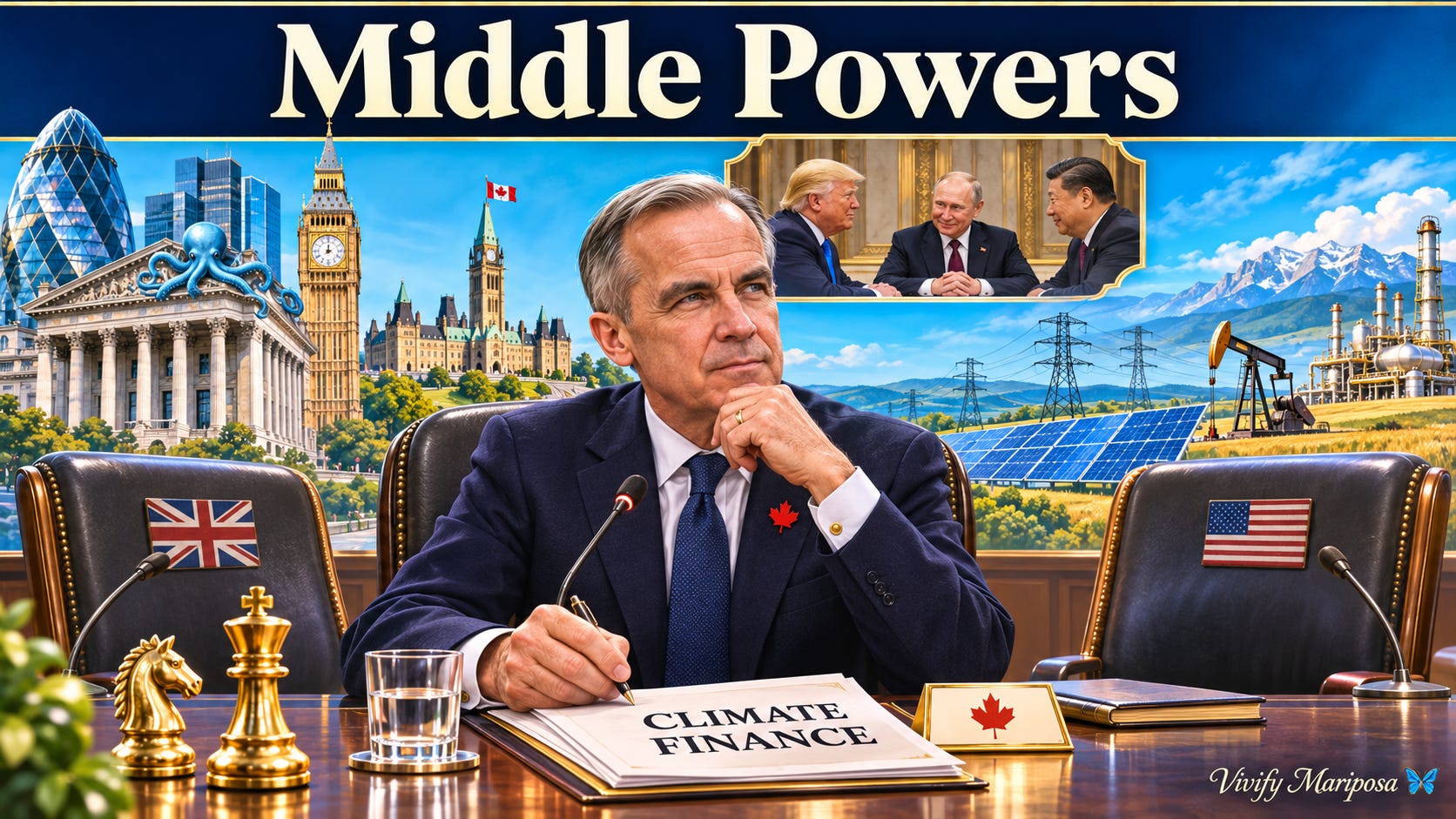
The same week, the world’s climate conference met in Turkey with no American delegation, because Trump had already taken the United States out of the Paris Agreement and out of the United Nations climate convention. The City of London published its own reading of the conference, and its language deserves the same attention as the reading on Shenzhen.It opened by complaining that “much of the political right in developed countries rejects efforts to combat climate change,” that leaders “nominally of the centre and left” are deprioritizing them, that corporations are dropping their net zero targets and fossil fuel companies are scaling back their low carbon divisions. It asked whether the conference is “detached from reality.” It admitted that the countries considered developed are “on the back foot,” and it described the United States as “the world’s leading oil and gas producer,” one day after its chief executive called that country’s President a supplicant. Without America in the room, the European Union’s top climate diplomat called further talks on climate finance “dead in the water,” and Britain’s own Prime Minister stood up at the summit and said the consensus on climate had “gone.”
It corrected the Prime Minister of the United Kingdom in public, writing that his statement “betrays a UK-centric perspective,” that cross-party support for climate action has indeed collapsed in Westminster, but that “a record share of the global population (75 per cent) considers climate change a serious threat.” When its own Prime Minister says the consensus is gone, the City reaches for a poll of the planet. It ended by promising that the conference will leave “a distorted, confusing and ultimately dissatisfying representation” of collective climate efforts, “as it always has,” and then that “the geopolitics of climate change and the energy transition are only getting started,” the language of an institution that needs the crisis to keep going because the money was always in the crisis.

In 2025 the world used 31,779 terawatt-hours of electricity. China used 10,573 of them, a third of the planet, the United States about 4,536, India about 2,083 and Russia about 1,176, so four countries the City cannot command use nearly six in ten of every unit of electricity on earth, and one of them did not even bother to send a delegation. Britain used 322, about one percent, and the energy researchers who count it wrote the comparison themselves: in a single year China added more solar generation than the United Kingdom’s entire annual electricity demand. The climate conference is a room where the country using one percent lectures the countries using sixty, and the product it sells, climate finance, is the City’s product, and a former Governor of the Bank of England co-chaired the Glasgow alliance of banks for net zero before he ran Canada. Without America in the room the finance talks were dead in the water, because a pledge is worth only what the people who burn the energy agree to pay, and the people who burn the energy were never asking London for permission to turn the lights on.
Then Canada and Britain issued a joint statement at the conference presenting themselves as “middle powers,” affirming their climate finance commitments and announcing new funding pledges, while, in the City’s own words, pairing that international positioning with “domestic retreat,” Canada committing public funds to new fossil fuel infrastructure and Britain approving new gas drilling. In The Machine Series: The Crown Commonwealth I followed Canada as the Crown’s operating ground, the country whose Prime Minister ran the Bank of Canada and then the Bank of England before he ran Canada, the country that kept the Cuba channel open through every American embargo, the partner London and Canberra turned to when they built intelligence sub-groups without Washington. When the Crown’s first dominion and the Crown itself choose the word middle to describe themselves, at a summit the United States did not bother to attend, the language has already told you who left the center.
In Davos in January Carney told the world that “middle powers must act together because if you are not at the table, you are on the menu,” and that “when we only negotiate bilaterally with a hegemon, we negotiate from weakness.” Ten months later he was in Shenzhen, in the same city as the table. On November 17 he sat down alone with Xi Jinping, bilaterally, with the hegemon, and came out with tariff relief and his promise that Canada is well ahead of schedule to raise its exports to China by fifty percent before the end of the decade. On November 18 he got just under twenty minutes with Trump around dinnertime, a meeting that was not on his public itinerary, with the trade representative, the commerce secretary and the new chief of staff, Stephen Miller, in the room, and his office reported that they “agreed to continue the work.” (Carney is such a clown)
On November 19 the United States, Russia and China sat down at one table, and the Prime Minister who invented the menu line was not at it. This is the country that wants to be the City’s next enforcer, the one that agreed to host the defence bank designed by a British soldier, endorsed by the British Chancellor and first convened inside the City of London, and the would-be enforcer spent the summit selling more to Beijing while fifty percent tariffs on its cars, trucks and auto parts wait for it in Washington on January 1. An enforcer that cannot hold its own trade line is an applicant.
Bruddah IZ
DA
The Rebuff That Asked for a Meeting.......Trump Care
The City (London) called the midterm a “heavy rebuff to Trump.” The new Congress is not sworn in until January, so the winners are not in office yet, and they are already calling the White House.Abdul El-Sayed won the Senate seat in Michigan, and three weeks later the senator-elect went on national television and offered to name his health care bill after the President, “TrumpCare,”
saying “if he’s open to the conversation, I am open to it, too” and “if the president is opening to signing that bill, let’s get it done.” He had already posted a gold insurance card with TrumpCare printed on it and the line “Donald, this is on the table,” which Trump reposted, and he called the program “the ultimate Trump card.” The Vice President’s chief of staff contacted El-Sayed after his victory, and the two have a meeting on the books.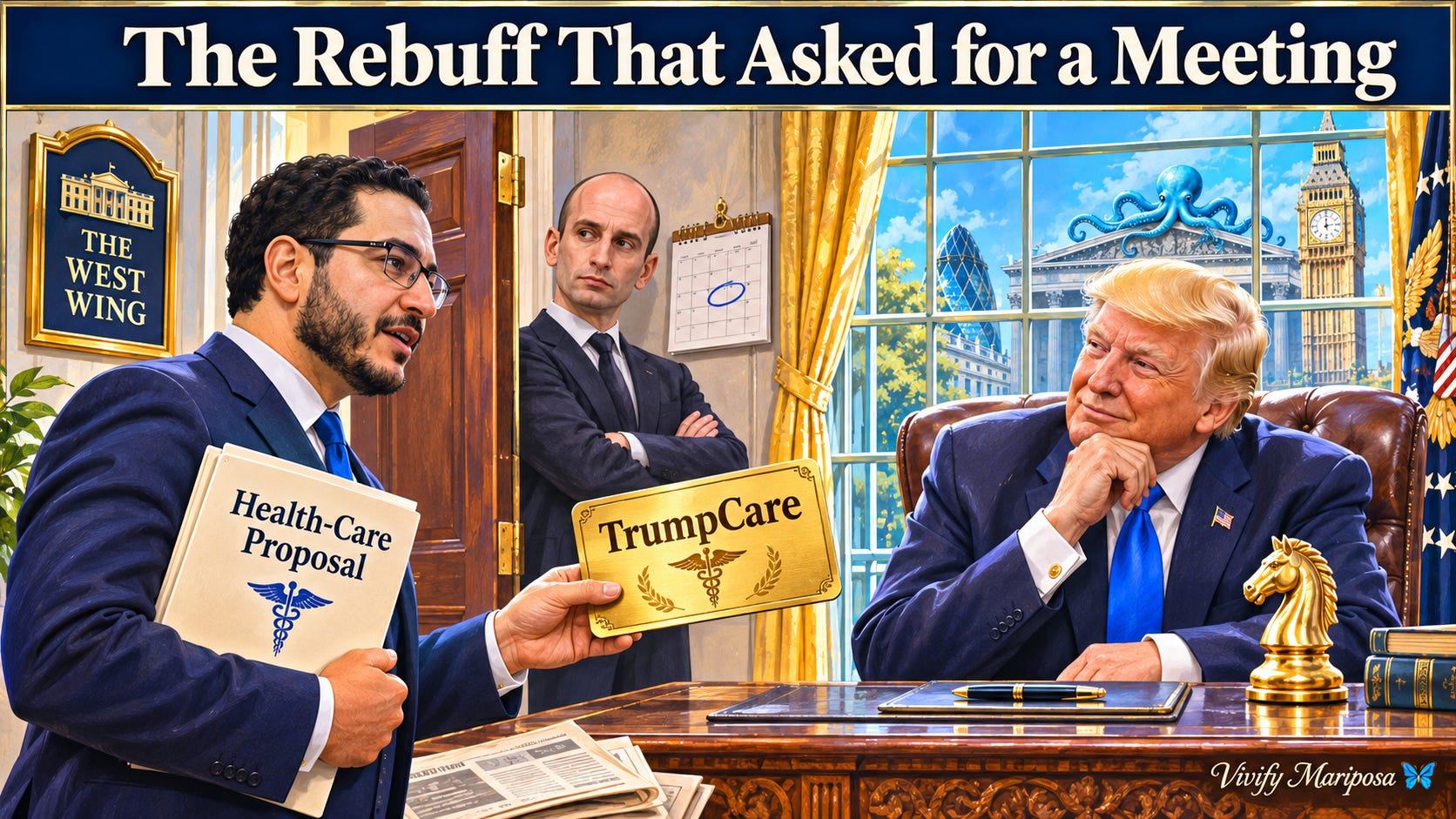
London’s newspaper reported it in its own vocabulary. The senator-elect, it wrote, is “not above stroking Trump’s prodigious ego,” and the President “has spent much of his second presidency trying to get as much as possible named after him.”
The same article calls the American insurance industry “rapacious” in its own voice, and then reports that the President holds the veto the whole bill depends on. Under the adjectives, a Democrat who has not taken his oath is offering the President the name on his signature legislation in exchange for a signature, and the Vice President’s office already scheduled the meeting.The same Sunday, the Senate Democratic leader promised that Senate Democrats “will always stand with Ukraine,” while the City of London’s chief executive had already written that a Democrat-dominated Congress is unlikely to send more money Ukraine’s way. The City does not believe the Democrats’ promise either, and the Democrats themselves are lining up at the door that Miller just put under the President’s lawyers, before their names are even on their own office doors.
Amen General Flynn
America doesn’t need more spectators. It needs citizens who are willing to lead.
Leadership isn’t a title—it’s a decision. It’s showing up for your family, your community, and your country when it’s easier to stay silent. It’s rejecting the comfort of the sidelines and accepting the responsibility that comes with freedom.
The challenges we face are real. But so is the strength of the American people when we choose to act. History is written by those who refuse to sit down.
This is the call. The question is whether we will answer it.
Time to:
Stand up,
Step up and,
Speak up.