

You are using an out of date browser. It may not display this or other websites correctly.
You should upgrade or use an alternative browser.
You should upgrade or use an alternative browser.
Today in Fascism
- Thread starter Hüsker Dü
- Start date


kickingandscreaming
PREMIER
Where’d these guys go? I never see them anymore.

"Meet Barrie Drewitt-Barlow and his husband Scott, two gay men who became famous for being the first "gay dads" in Britain after their twins were born via surrogacy
Both men were just charged with 18 criminal counts, including sexual activity with a child and paying for sexual services of a child.
This comes after the men were already indicted on sex trafficking charges.
DEATH PENALTY" Lib
Both men were just charged with 18 criminal counts, including sexual activity with a child and paying for sexual services of a child.
This comes after the men were already indicted on sex trafficking charges.
DEATH PENALTY" Lib
More Q 101. This is a gr8t time to be alive unless you're a cheater and a liar like espola Du Du. No humility to eat crow publicly or a eat a fresh slice of humble pie so the soul can grow and mature to next level. Some humans choose to hate so much they want to pee on a grave of the person they hate. This is the Spirit of the Dems today or some call the Spirit of the Anti-Christ(s). Those who left and walked away from this evil cult full of pedos are not from the dark realm and they saw the light and ran to it for safety. They didn't know that these monsters made all this fear up to kill us and replace us. Those WHO stay and play with these psychopaths and Pedos are they themselves a Pedo/Psychopath type of human. At the very least they support the criminals and the Pedos. These Pedos are in the library dancing in front of little kids this month. They even produce their own child sex toy to play with. These people cannot behave like this anymore.
Watch: https://hugh.cdn.rumble.cloud/video/fww1/2d/s8/2/4/G/w/z/4GwzA.caa.mp4?b=1&u=ummtf
Watch: https://hugh.cdn.rumble.cloud/video/fww1/2d/s8/2/4/G/w/z/4GwzA.caa.mp4?b=1&u=ummtf

Bruddah IZ
DA
My buddy's mom said and I quote, "They have been raping children for thousands of years. No one can stop this behavior." Well mama, you wrong big time!!!
They Renamed Slavery
They didn’t abolish slavery. They renamed it, redacted it, and cleared it through the City of London.
Vivify MariposaJun 20, 2026
When I first learned about the gang rape in the UK last year, I was disgusted. And then the media in the US was only talking about the Epstein files, just because they wanted to destroy President Trump. But I saw something else.
I saw two stories that everyone treated as opposites. One was foreign. One was domestic. One was poor northern towns nobody in America could find on a map. One was a weapon aimed at a sitting president. The people screaming about one refused to look at the other. And while they fought over which scandal counted, I noticed that both scandals were the same act in two different costumes. Children used as property. Institutions that knew and did nothing. And a soft word laid over the top so the public would never reach for the hard one.
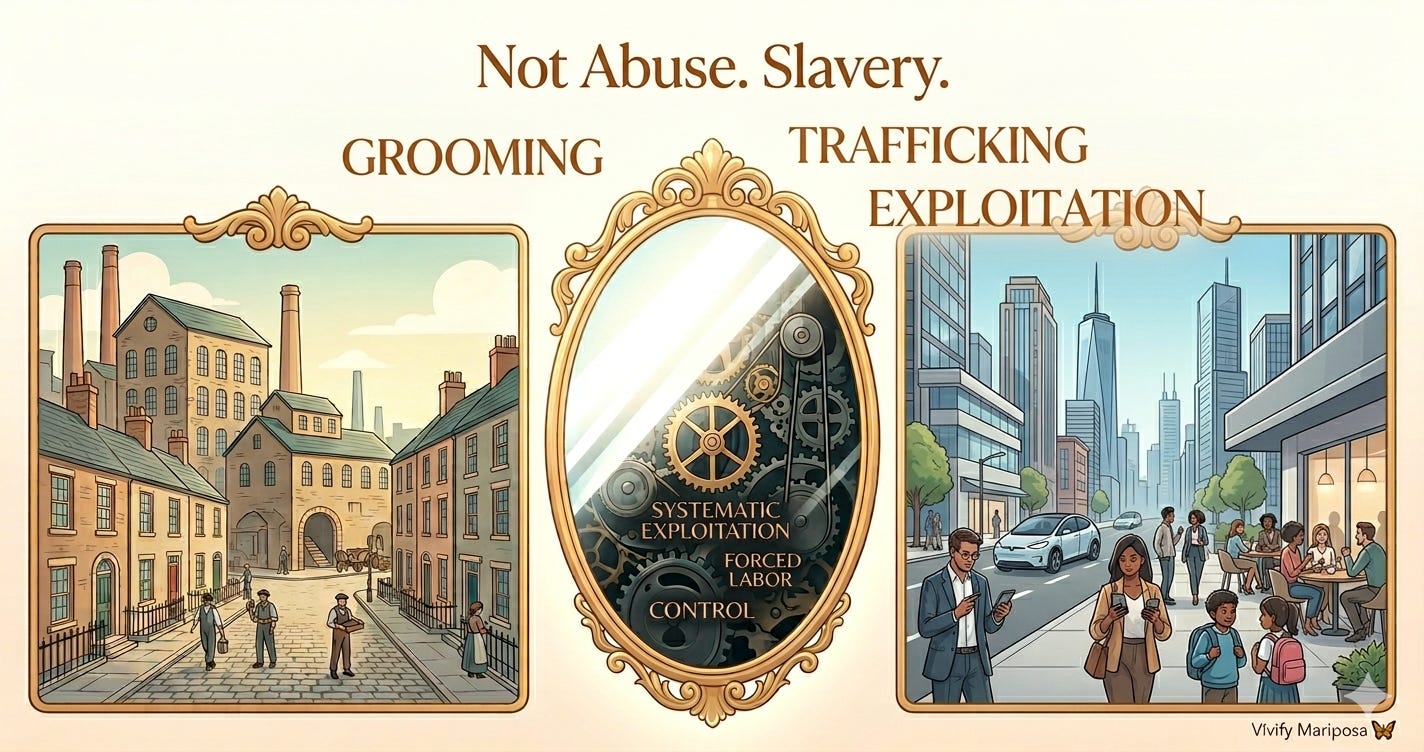
That is what this series is about. Not abuse. Slavery. The oldest business on earth, still running, still profitable, still protected, handed a fresh coat of vocabulary every time the old word starts telling the truth.
Bruddah IZ
DA
Six words for one crime
They gave it six names and every one of them was built to make you look away.Grooming. The word sounds almost tender, like brushing a horse. What it describes is a grown man selecting a child, isolating her from anyone who would protect her, and preparing her to be used.
Trafficking. The word sounds like freight and logistics. What it describes is a human being moved from one buyer to the next.
Exploitation. The word sounds like a labor dispute. What it describes is a body taken.
Safeguarding failure. The word sounds like a missed checkbox on a form. What it describes is the people paid to protect a child looking straight at the child and choosing the institution instead.
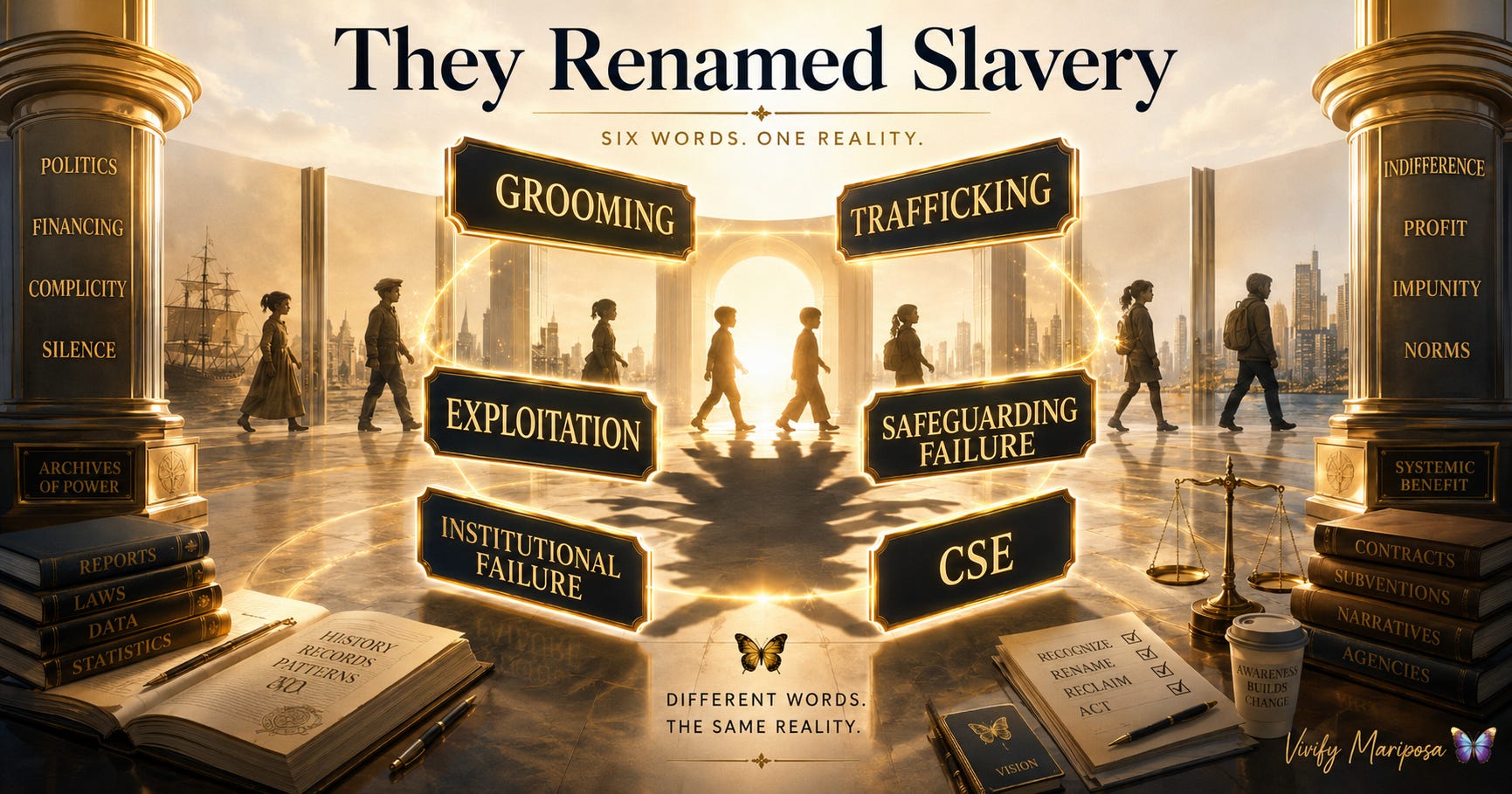
Migration crisis. Institutional failure. Two more clean phrases for one filthy thing, each one sliding a committee in between you and the auction.
They even shrank it into an acronym. CSE. Child Sexual Exploitation, cut down to three capital letters so it would fit neatly on a spreadsheet and slide past your eye without ever forming a picture in your mind.
Pick any of those words apart and the same thing falls out every time. A person was owned. A person was sold. A person was used and then blamed for being used. Strip the vocabulary away and what is left is older than all of it and has only ever had one honest name.
Slavery did not end. It was renamed. The product stayed the same. Only the paperwork changed.
Follow the money, not the words.
kickingandscreaming
PREMIER
Qualifies him to be Jimmie Kimmel’s replacement.

Bruddah IZ
DA
The word that became armor
In the northern English towns the men who ran the trade were not protected by their innocence. They were protected by a single word.
Rotherham. From 1997 to 2013, roughly 1,400 children were trafficked and abused in one town while the council and the police watched it happen. Sixteen years. Children as young as eleven passed between men, doused in petrol and threatened with fire, told their little sisters would be next. The authorities had the names. They had the reports. They had girls walking into police stations and naming the men who owned them.
And it was never only Rotherham. Rochdale. Telford. Oldham. Oxford. Rotherham was the number that broke through, but the same operation ran in town after town for years, and the official response in each one rhymed with all the others.
So read the reason in their own language. Officials worried about community tension. Officials worried about being called racist. They had been warned that going after these men would look bad, would inflame, would invite the accusation. So they did not go after them. The warning did its work before a single child was pulled out.
Then they made it worse. The children were not treated as victims. They were described as making lifestyle choices. Girls were arrested. Some were given criminal records of their own. The men who bought them were not. A child reporting her own trafficking was logged as a difficult teenager, and the grown man trafficking her was logged as nothing at all.

And the people inside the system who tried to stop it were destroyed for trying. Workers who handed evidence to the authorities watched that evidence vanish. Some were suspended. Some were defamed. Some had their homes raided at dawn and their assets frozen. Some were placed under gagging conditions so they could not speak. Files were destroyed. Shredders were purchased. A professor’s report in 2014 put the Rotherham number in black and white. A seven-year national inquiry followed. A national audit in 2025 finally forced the country to admit out loud that this was not one broken town but a working machine, running the same way everywhere.
This is how you change the name of slavery to racism. You do not stand up and argue that slavery is good. You make the act of pointing at the slavery the unforgivable thing. You take a word that should name an attack on human dignity and you bolt it to the front of the trade like steel plate, so that the first person punished is not the owner but the witness. Name the crime and you become the bigot. The traffickers never had to deny a thing. They only needed the public to fear one word more than they feared the auction.
The old slave catcher had to chase the people who freed the enslaved. The modern version needs no catcher. It just needs the right accusation hanging in the air, and everyone polices themselves.
Bruddah IZ
DA
Evil Bastard
Bruddah IZ
DA
The operation had an org chart
The men who buy do not do their own recruiting. A trade this size needs staff, and the staff is where you see that this was a business and not a string of crimes.Move to the richest version of the same machine, the one that ran out of a Manhattan townhouse instead of a Yorkshire estate. Jeffrey Epstein did not work alone. Ghislaine Maxwell, the daughter of a British media baron, gave the operation its respectable face and, by the account of the women he used, did the recruiting. The people around him called her Number 2. Below her sat a payroll. Sarah Kellen booked the appointments and the travel. Lesley Groff ran his calendar as an executive assistant for nearly twenty years. Nadia Marcinkova and Adriana Ross worked the residences. Jean-Luc Brunel, a modeling agent, ran a pipeline that moved young women and girls into Epstein’s orbit under the cover of the fashion business.
Look at the structure. A recruiter. A scheduler. An assistant managing logistics. A supplier feeding the front of the line. That is not a sickness. That is a company, with departments.
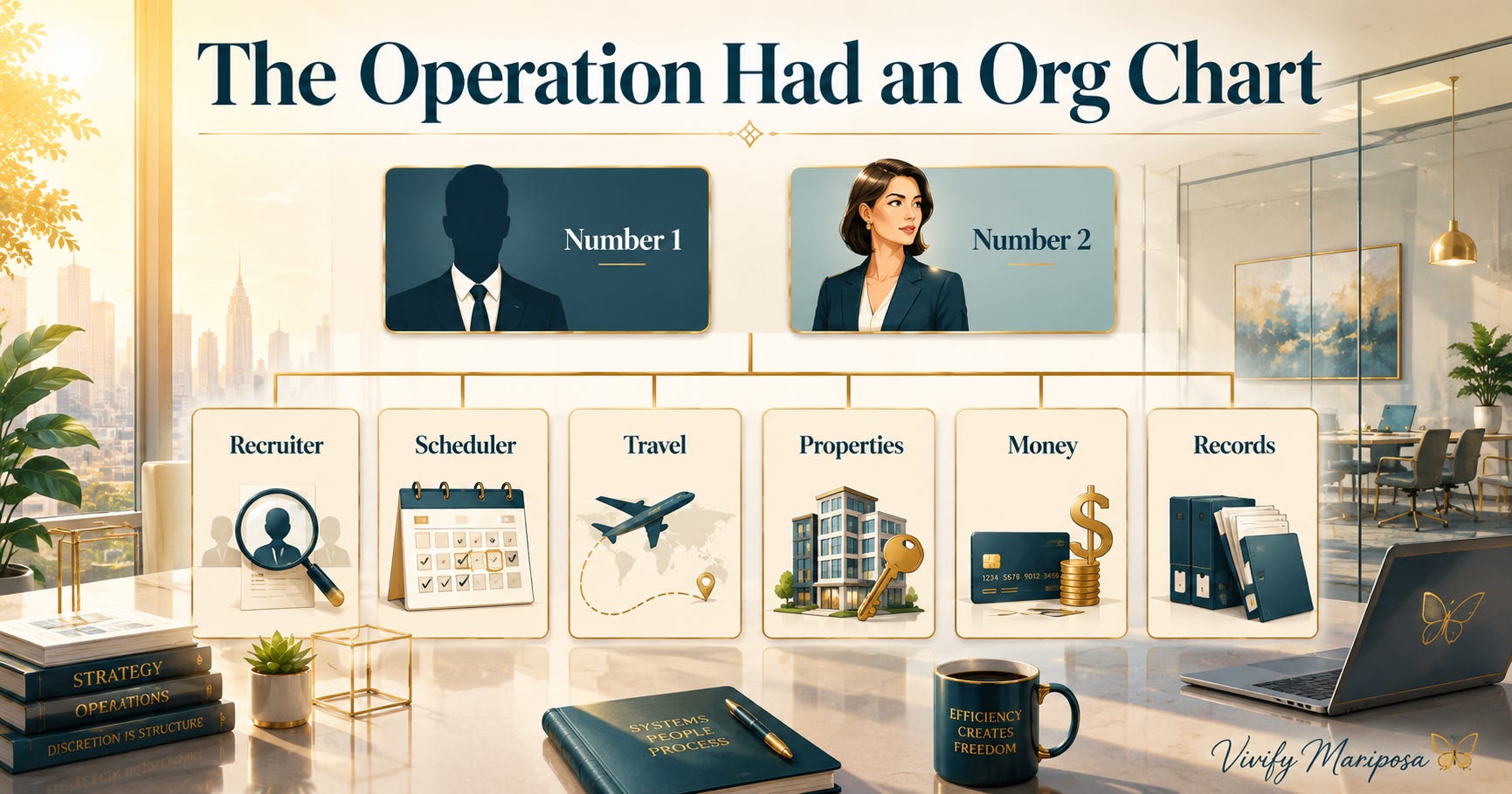
And the cruelest part is how the company reproduced itself. Some of the women who ended up scheduling and recruiting had first been brought in as girls, used, and then promoted into running the operation that had broken them. The trade trained its own next generation of staff out of its own victims. That is the oldest move in the history of slavery. You make the enslaved manage the enslaved.
The two figures who could have testified to the most are gone. Epstein died in a federal cell in 2019 before trial. Brunel was arrested in France, then found dead in a Paris jail in 2022 before he could be tried, ruled a suicide. The men at the top of the chart did not face a jury. And years later, when the estate’s own records came out, they showed payments still flowing to the staff, roughly a quarter of a million dollars to Kellen, around a hundred thousand to Marcinkova. The company was still settling its accounts long after the boss was dead.
Bruddah IZ
DA
The empire it moved across
You cannot run a trade this size out of one house. Epstein did not. He ran it across a private empire, and every piece of that empire was held inside a shell company so that no name sat on the deed.The nine-bedroom townhouse on East 71st Street in Manhattan. The estate on El Brillo Way in Palm Beach. Two private islands in the U.S. Virgin Islands, Little St. James and then Great St. James, the second one reportedly bought to keep eyes off what happened on the first. An eight-thousand-acre ranch in New Mexico. An apartment on Avenue Foch in Paris, tied to Brunel’s modeling agency. A house in each corner of the world, each one a node, each one held by a company instead of a man.
And he moved between them on his own aircraft. A Boeing 727 fitted with couches instead of rows of seats, the one the press named the Lolita Express. Gulfstream jets for the smaller hops. His chief pilot, Larry Visoski, flew for him from 1991 to 2019, close to a thousand flights. Under oath, Visoski called Maxwell Number 2 and called Epstein the big Number 1. And he was paid to stay loyal. Epstein gave him forty acres of the New Mexico ranch, paid his daughters’ college tuition, and wrote him into the will for ten million dollars. The man at the controls was bought along with everything else.

The flight logs name hundreds of passengers. I will say plainly that being a name in a log is not a crime, and most of the people in those logs did nothing wrong. But the logs do one thing that matters. They map the route. Teterboro to Palm Beach to the islands, again and again, year after year. That route is the supply line. The inventory was moved across a private empire on private planes, by paid crew, and the records of every trip still exist. Someone wrote it all down.
Bruddah IZ
DA
The same trade with better lawyers
Move that exact machine into an American courtroom and watch what the money buys. The shield changes. The trade does not.When Florida caught Epstein in 2007, his lawyers did not argue that he was innocent. They negotiated. And the deal they pulled out of the United States Attorney, Alexander Acosta, is one of the most extraordinary documents in American legal history.
The Non-Prosecution Agreement, signed September 24, 2007, did three things at once. It let Epstein plead to a state charge and serve about thirteen months, most of it on a work-release arrangement that let him leave the jail during the day. It promised the federal government would file no charges against him at all. And then it reached out and immunized other people by name, Sarah Kellen, Adriana Ross, Lesley Groff, Nadia Marcinkova, before going further still and shielding any potential co-conspirator, known or unknown. A federal prosecutor signed away charges against people the government had not yet bothered to identify. Read that again. Immunity for names that were not even on the page yet.
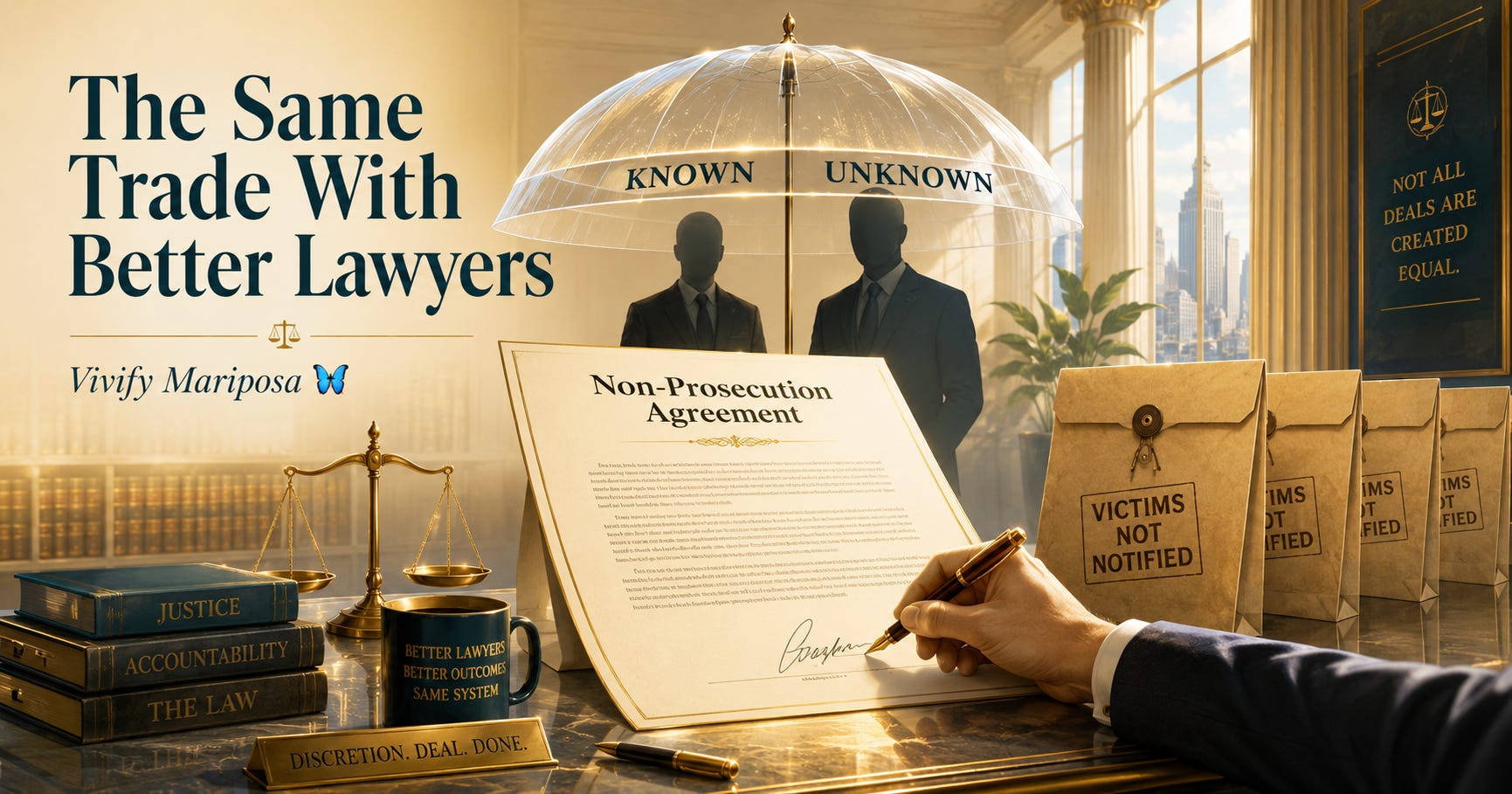
The victims were not told. Acosta’s office hid the agreement from the very girls it was built to silence, and let them believe the system might still work for them. In 2019 a federal judge, Kenneth Marra, ruled that hiding it broke the law, that prosecutors had violated the rights of the victims by keeping them in the dark. By then the deal had already done everything it was designed to do. The Justice Department’s own internal review later concluded that Acosta had exercised poor judgment. Poor judgment is the institutional phrase for it. Strip that phrase away and what sits underneath is a government lawyer handing a get-out-of-prison agreement to a trafficking operation and hiding it from the children while he signed.
Ghislaine Maxwell is the one who finally went to prison. A jury convicted her in 2021 and she is serving twenty years. She is the only person who went to prison for running the operation. Not the bankers. Not the financiers who paid in. Not the lawyers who built the immunity. Not the men in the flight logs.
Bruddah IZ
DA
The ledger in the safe
A slave operation keeps records. It has to. You cannot run an inventory you do not track.In July 2019, the FBI searched the East 71st Street townhouse. In a dressing room they found a safe and sawed it open. Inside was hard drives, CDs, jewelry, loose diamonds, stacks of cash, and passports, including an expired passport that carried Epstein’s photograph under a different name and listed a foreign address. Elsewhere in the house, agents found binders of discs in labeled sleeves, meticulously organized, some marked with names. The government’s own bail memo described hundreds of carefully labeled images locked away in that safe.
Sit with that word. Labeled. Organized. Filed. This was not a man who lost control in a dark moment. This was a catalogued library, maintained over years, indexed and stored like stock in a warehouse. The cataloguing is the proof. You do not label an accident. You label inventory.
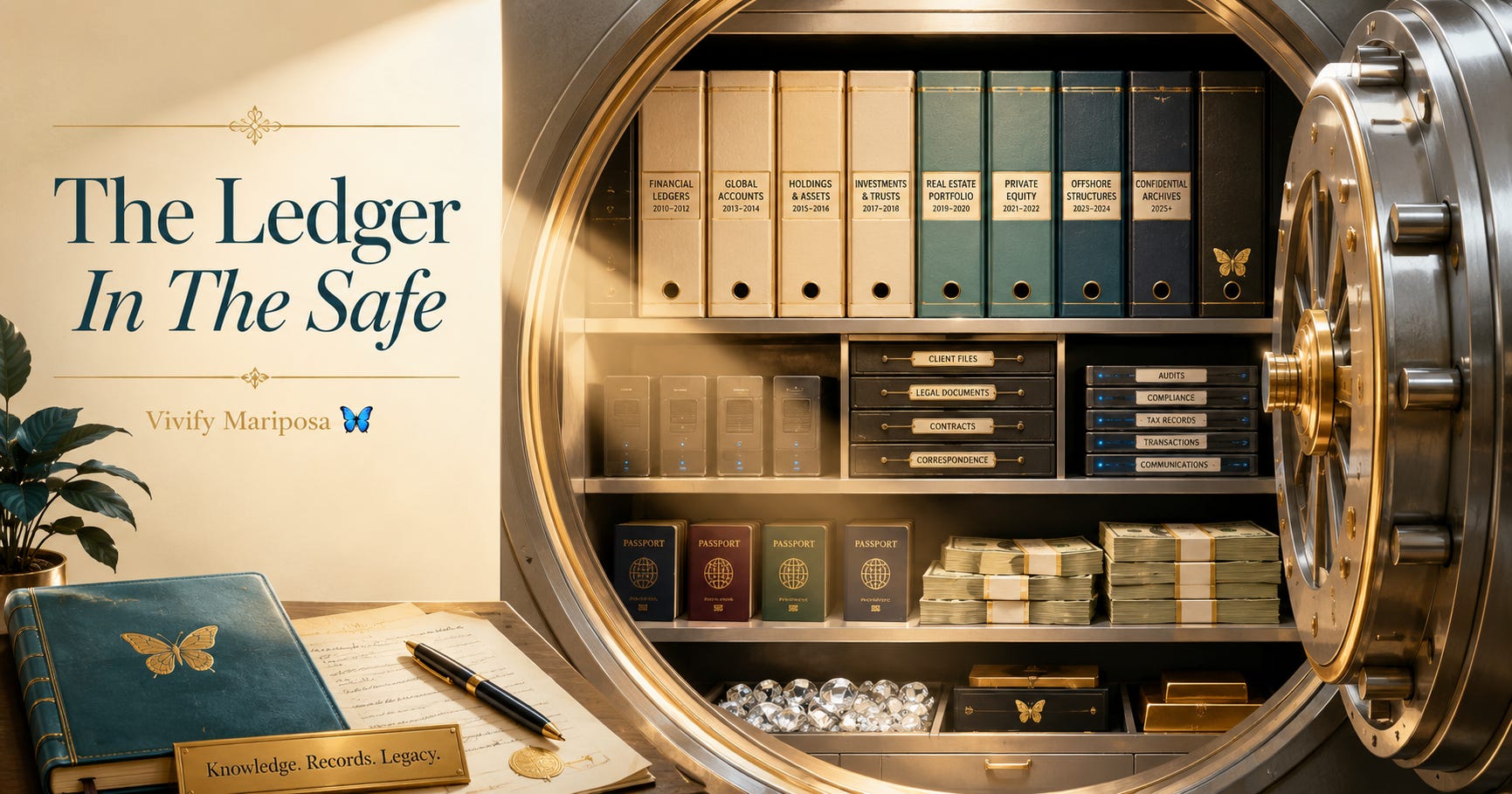
And even the inventory had a chain of custody problem that tells you who was protecting it. Under the first warrant the agents were not authorized to take the drives and discs, so they left them on top of the safe. When they came back days later with a broader warrant, the items were gone. Epstein’s lawyer, Richard Kahn, delivered two suitcases of them to the FBI minutes later. The most sensitive records in the case left the scene and came back through a lawyer’s hands, and the only reason we know is that an agent testified to it.
In 2025 the Justice Department announced that it had reviewed everything and found no client list and no blackmail operation. A catalogued library, meticulously labeled, names on the sleeves, recovered from a sawed-open safe, and the official conclusion was that there was nothing here pointing at anyone else. Hold that thought. It matters later.
Bruddah IZ
DA
Where the money lived
Slavery is not an emotion. It is a business. And the way you prove a business existed is you follow what it cost and where the money sat. In this business the money is on the record.Start with Leslie Wexner, the retail billionaire who built Victoria’s Secret. In July 1991 Wexner handed Epstein full power of attorney. One document. It let Epstein sign checks, hire and fire, borrow money, sign tax returns, and buy and sell property in Wexner’s name. It made Epstein the shadow operator of one of the largest personal fortunes in America. Between 1991 and 2006 Epstein oversaw the movement of more than 1.3 billion dollars of stock held in Wexner trusts. He was named president of Wexner’s New Albany development company, and in a later deposition Maxwell said flatly that Epstein ran New Albany. The townhouse that became his New York base came to him through a transfer from Wexner. Across the years Wexner’s businesses paid Epstein a reported two hundred million dollars in fees. A man with no fortune of his own was suddenly holding the keys to one of the biggest, and the public was told he was simply a brilliant money manager.
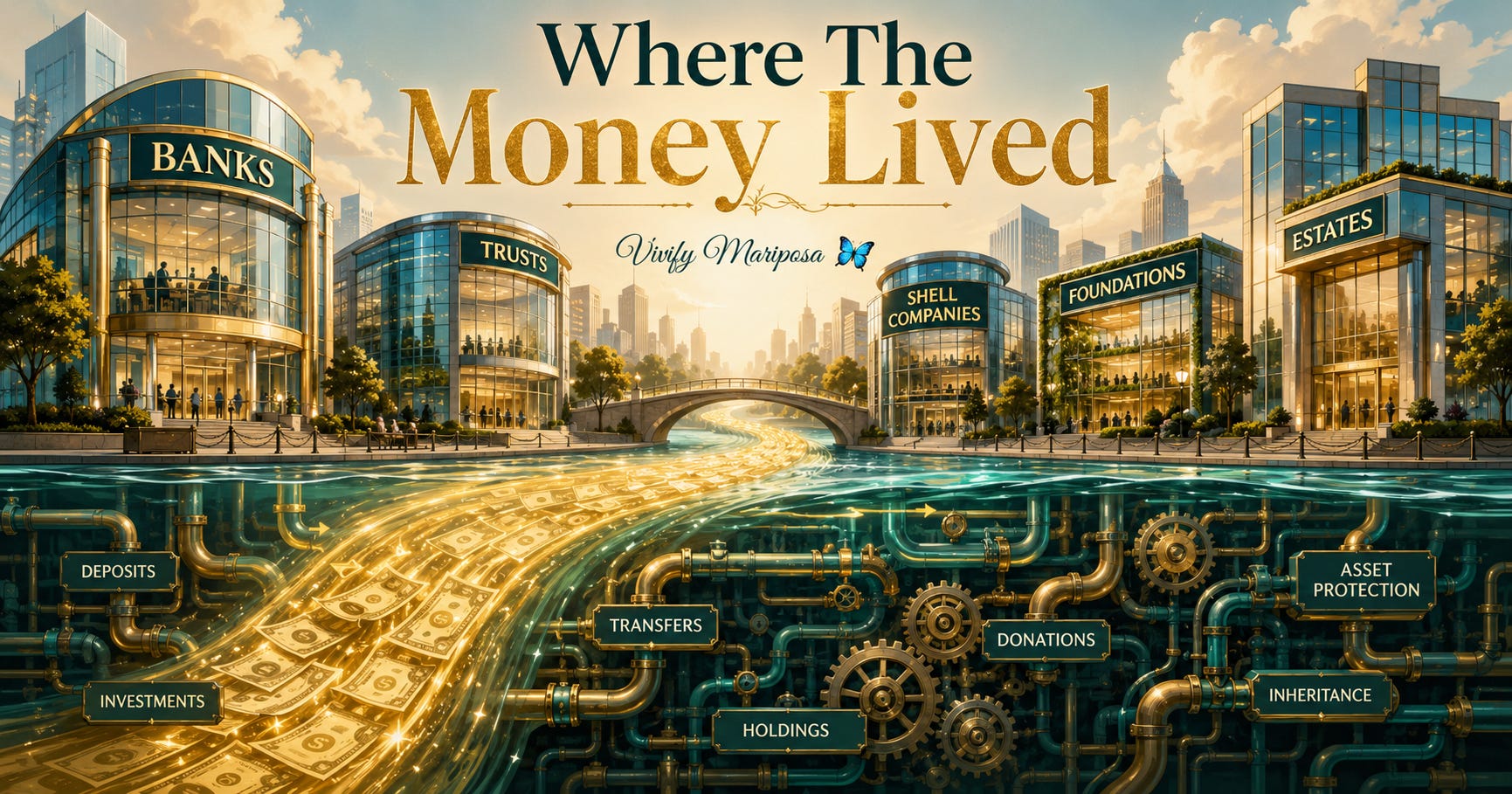
Then Leon Black, the founder of Apollo Global Management. Black paid Epstein somewhere between 158 and 170 million dollars across five years, from 2012 to 2017, for tax and estate advice. Epstein held no license as a tax attorney and no certificate as an accountant. He was a college dropout. When the United States Senate Finance Committee examined the size of those payments, it called them inexplicably large, larger than what Black paid actual professionals, larger than the pay of most Fortune 500 chief executives. More than a hundred and fifty million dollars to an unlicensed man, years after he was already a registered sex offender.
Then the banks, because none of this moves without the rails. JPMorgan kept Epstein as a client from 1998 to 2013 while its own employees pushed to drop him and were overruled. The bank’s own systems flagged more than a billion dollars of his transactions as suspicious. The bank kept him anyway, for fifteen years, until a compliance officer finally cut him loose. When it all came apart, JPMorgan paid 290 million dollars to his victims and another 75 million to the U.S. Virgin Islands. Deutsche Bank picked Epstein up the moment JPMorgan let him go, ran his accounts from 2013 to 2018, absorbed a 150 million dollar penalty from New York regulators for the compliance failures tied to him, and paid 75 million more to the victims. His estate paid the Virgin Islands another 105 million.
Those are not the numbers of a scandal. Those are the numbers of an industry. Banks do not move a billion dollars for a hobby and they do not pay nine-figure settlements for a misunderstanding. The settlements are the receipt. They tell you the trade was real, the institutions knew, and every one of them ran the same math and decided the children were worth less than the relationship.
And watch what happens to the people who try to collect. The Virgin Islands Attorney General, Denise George, sued JPMorgan over its role in all of it. She was fired days later. Not the bank. The prosecutor.
Bruddah IZ
DA
Nothing clears without London
Follow the money far enough and it stops in one place. Not New York. London. And not the London with the red buses and a Parliament you can vote for. The other one. The square mile inside it that keeps its own courts, its own police, its own laws, under a charter older than the country around it, answerable to no living voter. The clearing house of the world sits there, and nothing of size moves through global finance without crossing its rails and earning its approval.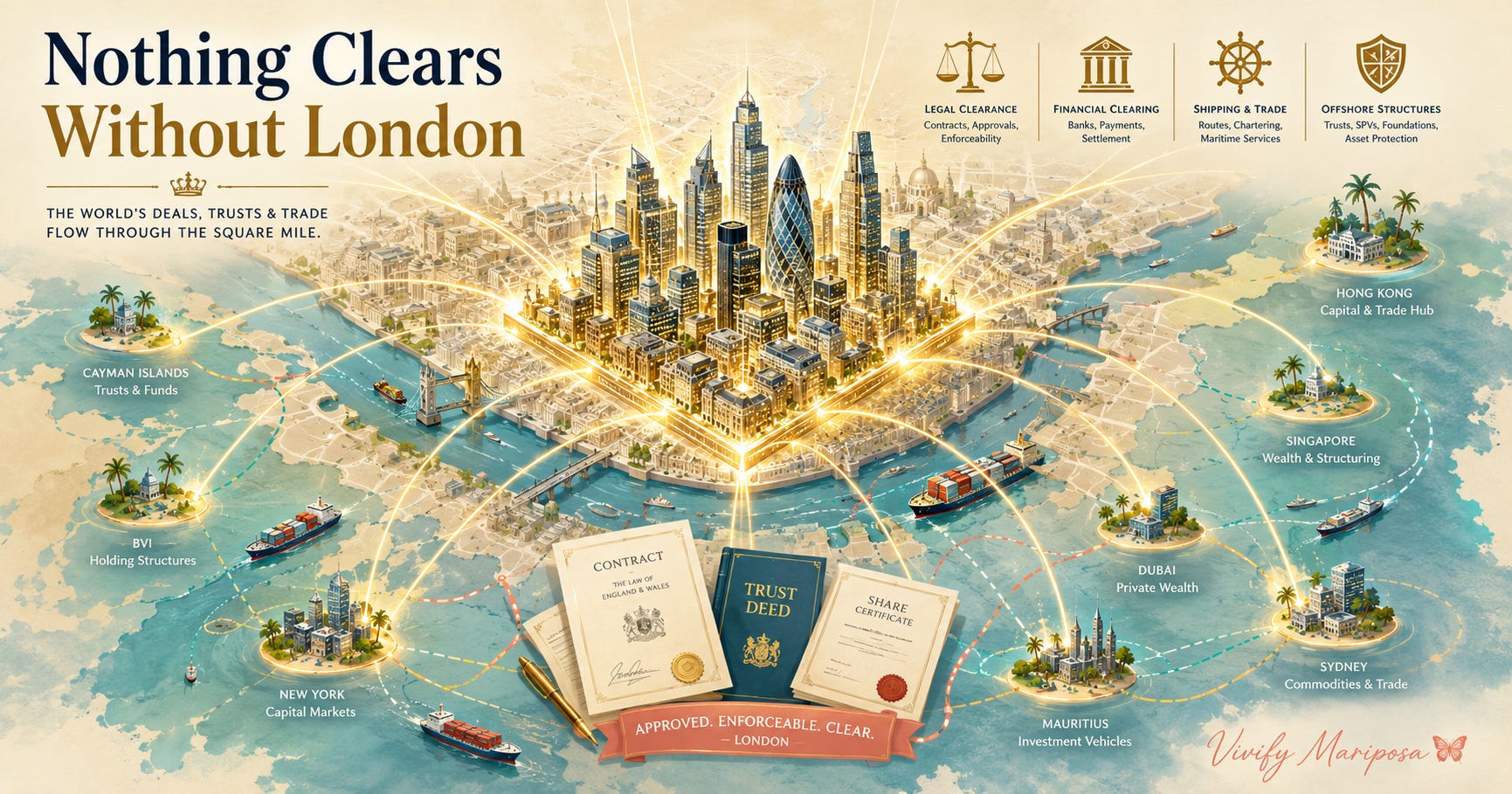
That is the layer that sits above the banks I just named. JPMorgan and Deutsche Bank moved Epstein’s money, but the banker who had been closest to him inside JPMorgan went on to run one of London’s biggest banks. Jes Staley handled Epstein as a private client at JPMorgan, then became chief executive of Barclays. When British regulators finally examined that relationship, what came out was not distance. Staley had called Epstein one of his deepest and most cherished friends. He stayed in contact for years after he claimed the friendship was over. In 2019 he signed off on a letter from Barclays to the regulator that played the whole thing down, and a tribunal later found he had done it recklessly. The Bank of England’s own governor gave evidence. The regulator banned Staley from the City, and in 2025 the tribunal upheld the ban and found he had shown no remorse. Barclays clawed back nearly eighteen million pounds of his pay. The man who sat closest to Epstein inside the banking world spent six years running one of London’s biggest banks.
Now look at where Epstein kept the structure. His islands, his trust companies, his shell entities lived offshore, and offshore is not a scatter of sunny independent nations. It is an architecture, and London built it. English-derived law governs more of the world’s financial contracts and trusts than any other system on earth. The secrecy jurisdictions that exist to hide who owns what, Cayman, Bermuda, the British Virgin Islands, the Isle of Man, Jersey, Guernsey, are British territories and dependencies, feeding the same square mile. The faceless shell company that holds a mansion so that no name sits on the deed is not a trick Epstein invented. It is the standard product of a system London designed and London still runs. The secrecy he used was bought off the shelf.
And here is the part that makes the City untouchable in a way Epstein never was. Epstein had a face. The City does not. A hundred years ago the Rothschild family ran European credit with their name on every loan, and that visibility is exactly what destroyed them. The system learned the lesson and buried the function inside an institution with no founder, no single owner, no face to put on a poster. You cannot strip a title from a structure that never had a name.
Which brings you to the man they could strip.
In the autumn of 2025 the British establishment removed Prince Andrew. They took the style His Royal Highness. They took Duke of York. They took the word Prince itself, the first time a British royal had been stripped of that title since 1919. They moved him out of his mansion at Royal Lodge. Andrew had flown with Epstein, stayed in his homes, been named by Virginia Giuffre, and settled her lawsuit in 2022 without admitting a thing. For years the Palace shielded him. This is the same Palace that, by a television anchor’s own hot-mic account, learned a network was holding Giuffre’s allegations and leaned on that network to keep them off the air. Then the moment the cost of protecting Andrew climbed higher than the cost of dropping him, they dropped him.
Read it as what it is. Not justice arriving late. Housecleaning. You cut off the visible hand to protect the invisible body. Andrew was a face, and a face can be removed, so they removed it, and every headline about a disgraced prince is a headline nobody is writing about the architecture that made the trade legal, bankable, and invisible in the first place. The prince was expendable. The square mile is not. They can take a man’s titles in a single afternoon. They have never once let a foreign magistrate walk out with a single file.
Bruddah IZ
DA
The Church ran the same machine
Now take the same machine and put a collar on it instead of a Rolex.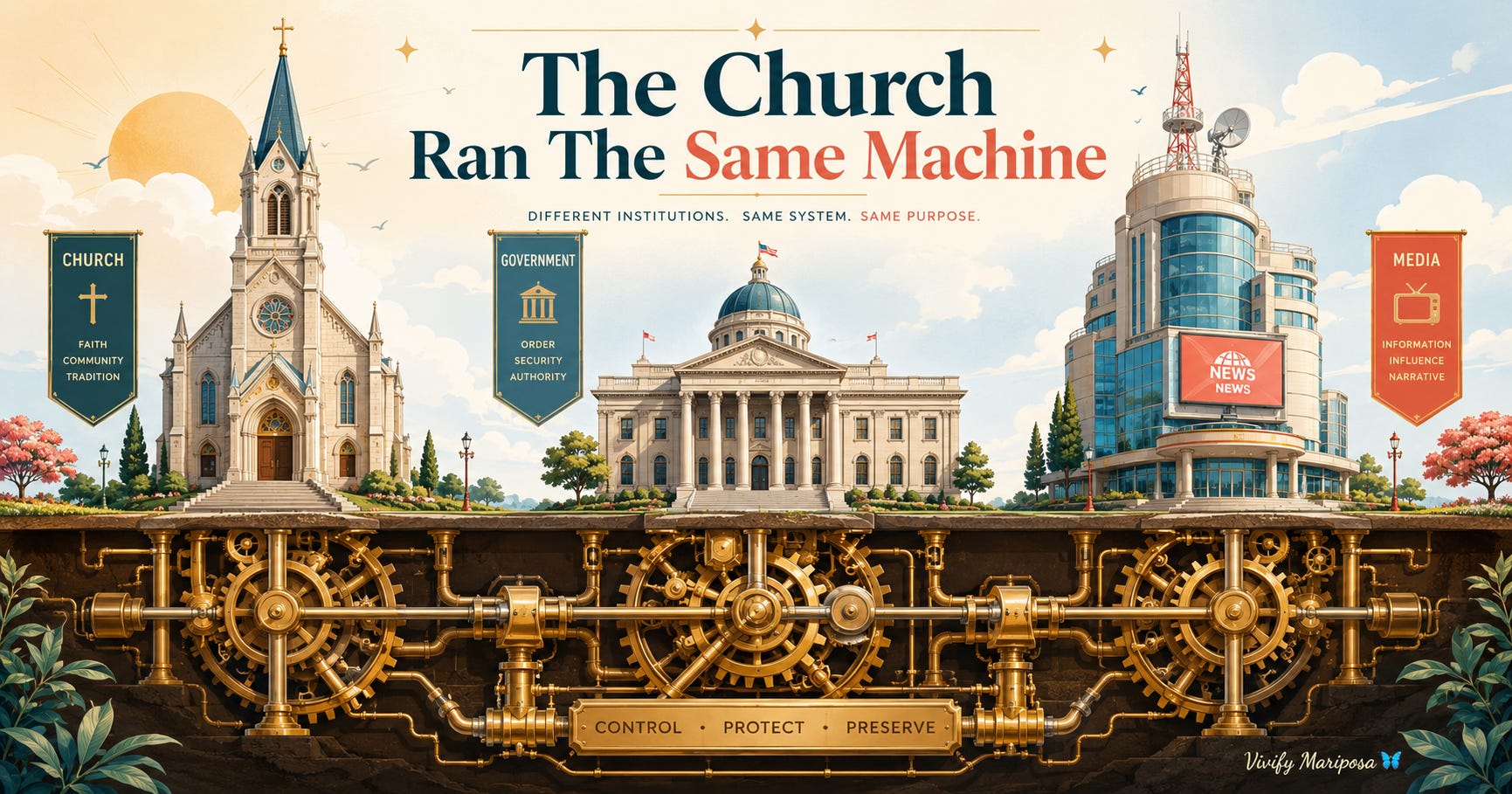
The Catholic Church in Boston ran the identical operation with priests in the place of financiers. The abuse was known inside the institution for decades. The response was never to call the police. The response was to move the priest to a fresh parish where nobody knew, seal the file, and settle quietly with a signature that bought the family’s silence. Reassign. Conceal. Deny. Reassign again. When reporters forced it into daylight in 2002, and again when a Pennsylvania grand jury laid out the records in 2018, the picture was identical to Rotherham and identical to the Epstein files. The institution protected the institution. The child was the cost of doing business.
It was not only the Church. In Britain, the entertainer Jimmy Savile abused hundreds of victims across decades inside BBC studios and NHS hospitals, the complaints brushed aside because his celebrity opened every door, the reckoning arriving only after he was safely dead and could not be charged. Same machine. Different uniform.
Bruddah IZ
DA
One machine, three costumes
Three different worlds. A Yorkshire council. A Florida prosecutor’s office. A Boston diocese. Not one of them shared a single suspect with the others. Every one of them shared the same sequence.Delay the investigation until the trail goes cold. Disbelieve the victim, and where you can, turn the victim into the offender. Put the name and the comfort of the institution above the safety of the child. Lose the records, black out the records, or destroy the records outright. Then stand up and announce that the matter is closed and everything has been handled.

That sequence is the machine. It does not care whether the owner is a taxi driver in Rochdale or a billionaire in a Manhattan townhouse or a priest in a Boston parish. The men are interchangeable. The machine is the constant. The words painted on the front of it are just paint.
Bruddah IZ
DA
It is happening right now
Here is the part the people fighting over Epstein on television keep skipping. This is not a closed file from the 1990s. The names are still surfacing, in real time, while you read this.The House Oversight Committee subpoenaed the Justice Department and the Epstein estate in 2025 and forced out tens of thousands of pages, more than thirty-three thousand in a single release. It took the former United States Attorney Acosta under oath in September 2025. It deposed a former Attorney General. It deposed Bill and Hillary Clinton in early 2026. It took sworn interviews from a former Attorney General, Pam Bondi, and from Sarah Kellen herself in May 2026.
And out of Kellen’s sworn testimony came the first new names in years. On June 4, 2026, the Committee referred to the Justice Department allegations of sexual assault against Philip Levine, the former Mayor of Miami Beach, and Frederic Fekkai, a celebrity hairstylist. The Committee called them the first names of alleged criminal conduct unearthed by any investigation into this network to date, and asked the Department to use every tool it had, including immunity for witnesses who would talk. Those are allegations, referred and not yet proven. But the referral is real, and it landed in the summer of 2026, not in some dusty decade nobody remembers.
The Committee has reached into both parties. The Clintons sat for depositions. Records tied to an accusation against the President were reported missing from the public database, and the Committee said it would look into that too. The machine does not run for the left or the right. It runs for itself, and it has always protected whoever it had to protect.
The names coming out in 2026 are the proof that the trade never stopped. It is being pried open one sworn interview at a time, against a Department that keeps insisting there is nothing left to show.
Bruddah IZ
DA
First you change the word, then you hide the page
The renaming has a second half, and the second half is the redaction. First you change the word so people stop looking. Then, when they look anyway, you hide the page.Congress forced the Justice Department to release the Epstein files. The Department put out about 3.5 million pages and admitted that roughly 6 million exist. Half of it is still in the dark. The acting Deputy Attorney General, Todd Blanche, told Congress the release was finished and the obligation was met.
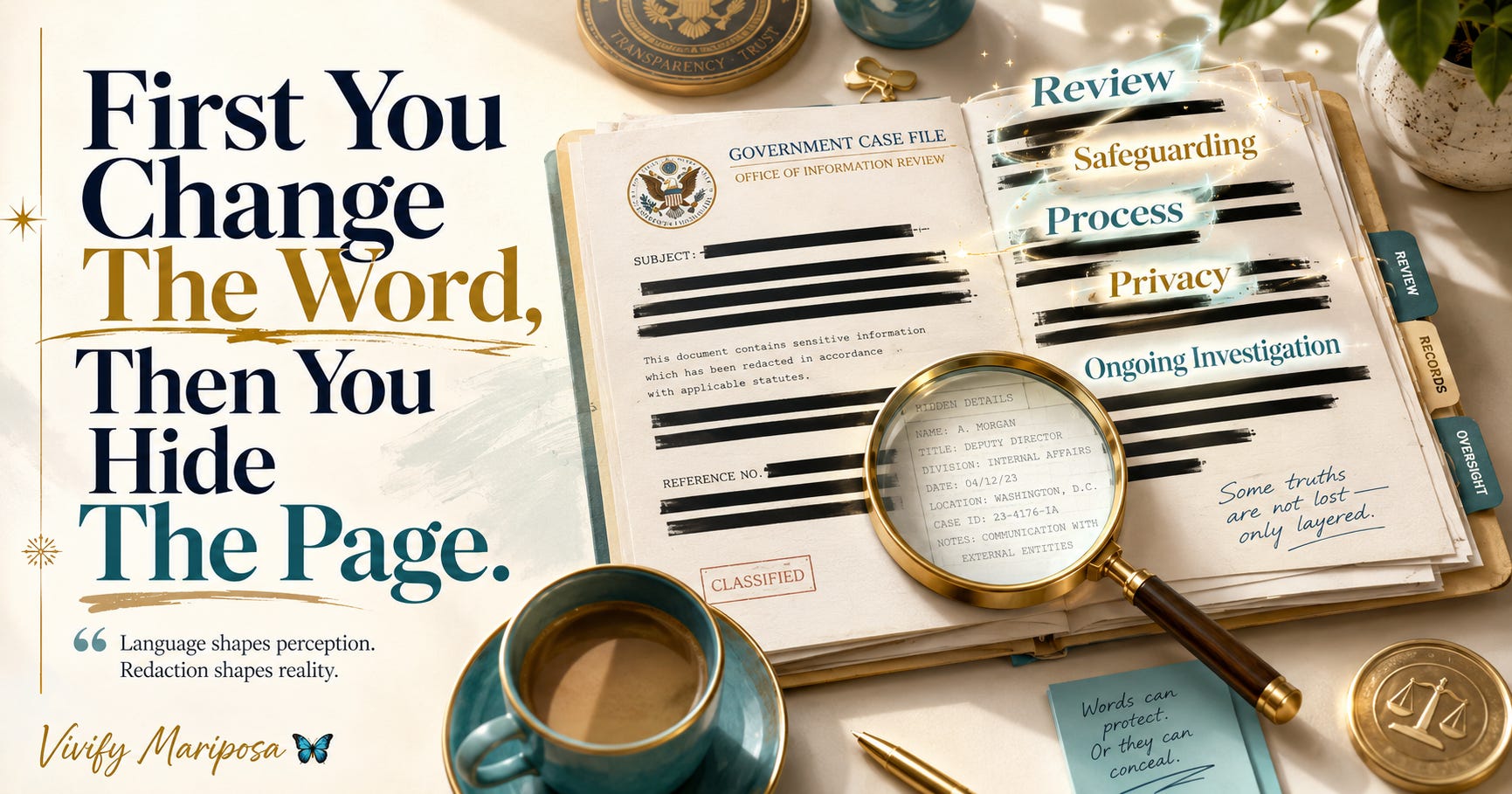
Inside the part they did release sits a federal memo from a money-laundering investigation that named Epstein and fourteen other people and entities, an operation into illegitimate wire transfers tied to drug and prostitution activity moving between the Virgin Islands and New York. The fourteen names are blacked out. When Senator Ron Wyden asked for the version without the black bars, Blanche stepped in and blocked it. The entire investigation that produced the memo was quietly shut down. A government that swears everything has been released is a government still holding the names.
This is the soft word again, run later in the process. Grooming hides the auction at the start. The black bar hides the buyers at the end. One is a word and one is a rectangle of ink, and they do the exact same job. They keep you from seeing who owned whom.