

Bruddah IZ
DA
Spain Was Not a Side Door
Spain is the washing door into Europe, and it is not a side door. It is a main entrance, held open.The looted oil wealth of Venezuela landed in Spain. It came out of the Venezuelan state oil company, moved through a private bank in Andorra that the United States Treasury named as a laundering concern for pushing roughly two billion dollars of that money, and it came to rest in Spanish property, in Spanish consulting contracts for work that was never done, in residency papers that turn dirty money into a clean European passport. The former chief of Venezuelan military intelligence, a central figure in the whole narco machine of that state, was arrested in Spain and extradited from Spain to the United States, where he pleaded guilty. The trail of that money ran through Spanish courts for years.
And the cocaine lands in Spain too, by the ton. On the coast of Galicia, where the clans have run the Atlantic beachhead for decades. In the great container ports. In one shipment alone the Spanish seized thirteen tons of it hidden in a load of bananas that had sailed from the port of Guayaquil in Ecuador.
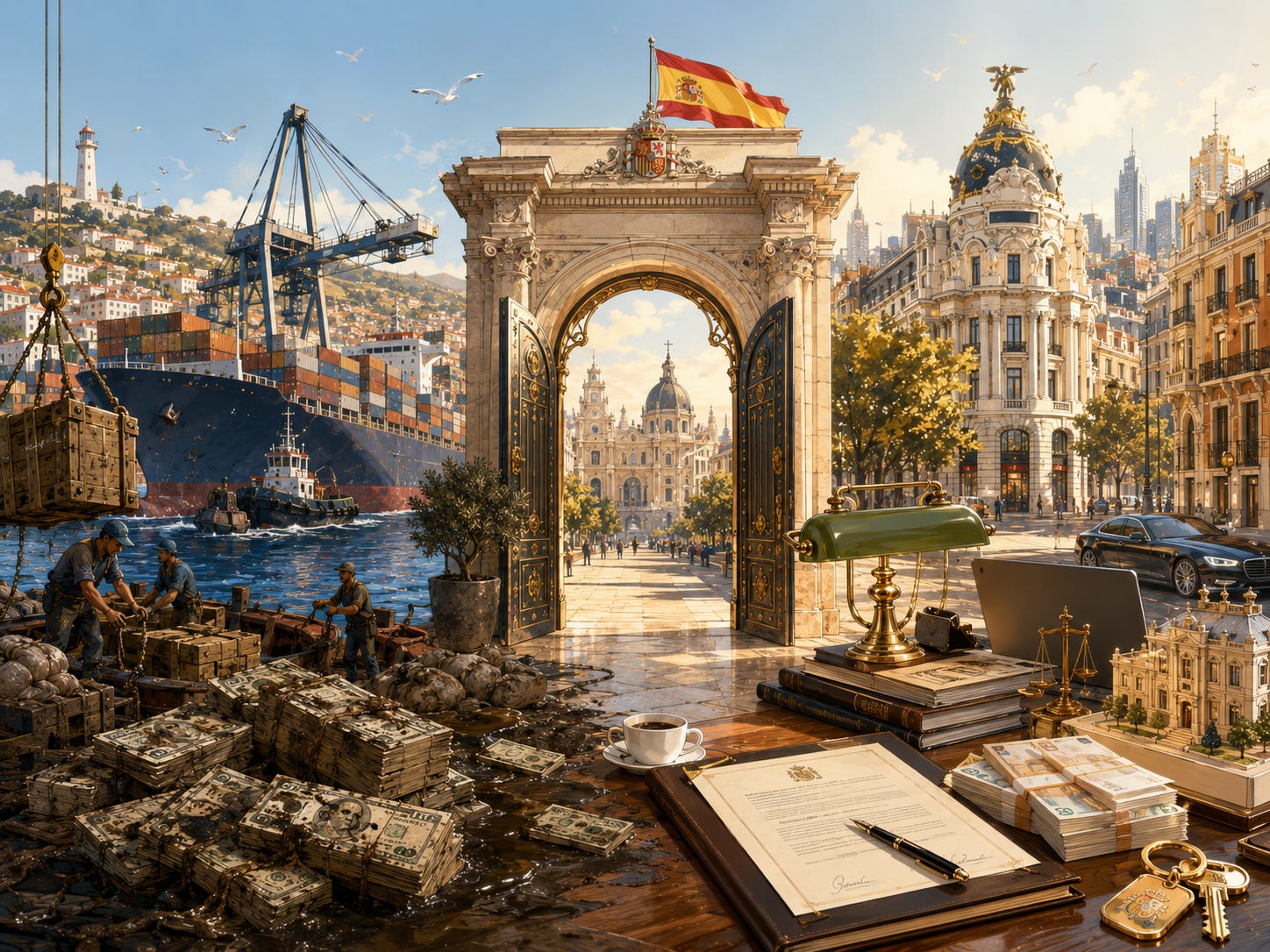
This is what a washing door does. It does not grow the drug. It does not move the drug. It takes the money the drug made, on the way out of the poor end of the route, and it hands that money a clean European suit and a passport. The bodies are an ocean away. By the time a Spanish court even opens the file, the money is already property, already a respectable fortune, already inside Europe for good.
That is why Spain matters. Not as scenery. As the landing.
But a washing door does not stay open by itself. It needs a political class that will not look too hard, and Spain’s has been busy.
The man who was transport minister, the number three in the governing party, the one who helped put the prime minister in power, sat in a Madrid courtroom this year with prosecutors asking for twenty-four years. The charge is bribery and running a criminal organization. During the pandemic the contracts for medical supplies went to a front company that had earned nothing the year before and booked fifty-four million euros in one. A businessman in the middle of it, facing prison, began to talk. He said he carried between three and a half and four million euros in cash, in envelopes, to the minister and his adviser. And he said the masks were the small part. The real money came from rigged public works.
It did not stop at the ministry. The prime minister’s wife is due in court. His brother is due in court. When the police raided the governing party’s own headquarters and carried out the computers, the target was the man who had taken over the machinery of the party, suspected of working to sabotage the judges who would not drop the files.
And the deepest thread runs back to the oil gate. A former prime minister, the political mentor of the man in power now, was placed under investigation for leading a network of influence peddling and money laundering tied to Venezuela. The case turns on a fifty-three million euro state rescue of a small airline wired into Caracas, and whether that airline was a pipe to move Venezuelan money through France and Switzerland and into Spanish property. His years of defending Caracas in public may not have been diplomacy. The courts are asking whether it was a business. European political access, traded for Venezuelan oil money.
The warrants keep getting signed. The raids keep happening. The cash envelopes are being read into the record. The washing door is being pushed shut from the inside. Ask yourself who spent years holding it open, and who they were holding it open for.
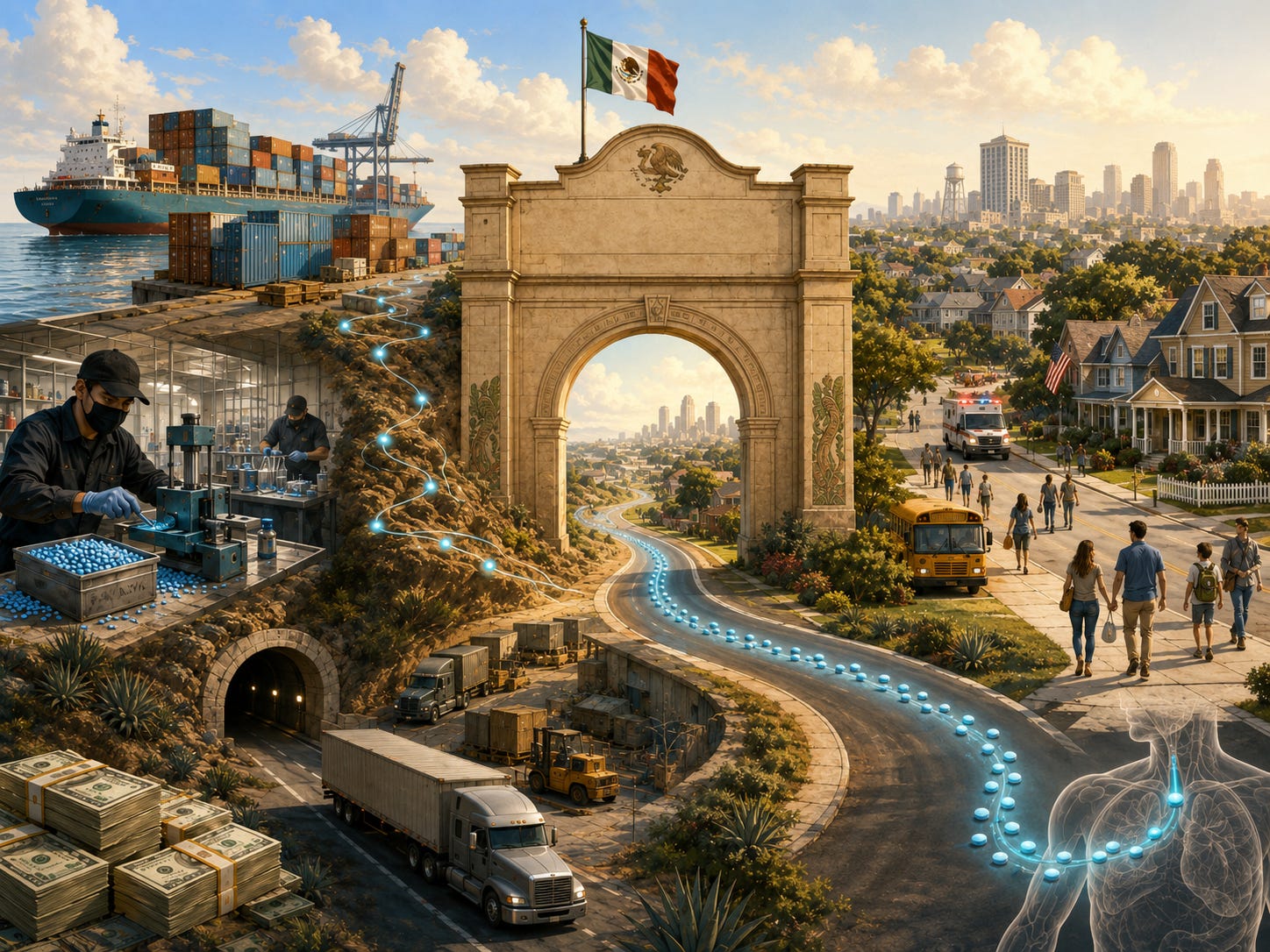
That is the money’s end of the road. The other end is a body. And the body falls in the country with the deepest pockets and the widest open gate.








 No Filter. Just Facts.
 THE CLIP is what happened, in plain English.
  THE RECORD is the article where I already laid out the history behind it.
  THE SEQUENCE is what the history tells you the clip actually means.