
Told you that Elon was a weird guy.I actually met Elon around 2015 + saw Bill Clinton speak at the same event.
All I can say is that Elon is a weird guy. He definately seemed autistic. However he was highly intelligent and surrounded himself with very smart people. I could see him being very well versed in many different topics just because he's always surrounded by the best of the best.

You are using an out of date browser. It may not display this or other websites correctly.
You should upgrade or use an alternative browser.
You should upgrade or use an alternative browser.
Elon Musk
- Thread starter Multi Sport
- Start date

Multi Sport
DA
Elon on the move again launching his version of Wikipedia called Grokipedia. It uses Grok ai hence the name.
kickingandscreaming
PREMIER
They do some revealing comparisons between Grokipedia and Wokipedia on X.Elon on the move again launching his version of Wikipedia called Grokipedia. It uses Grok ai hence the name.

Hüsker Dü
DA
A federal investigation into Representative Ilhan Omar's citizenship has prompted a straightforward question: If the standard applies to her, does it apply to everyone?
Omar, who arrived in the United States in March 1995 after fleeing Somalia's civil war, was naturalized at age 17 in 2000. She has repeatedly denied allegations of immigration fraud that first surfaced in 2016. In recent weeks, agents with Homeland Security Investigations executed a search warrant at her Washington, D.C. home as part of an ongoing federal criminal investigation. Tom Homan, the White House border czar, told Fox News that authorities were examining allegations tied to claims of a sham marriage.
Yet the citizenship histories of other prominent figures who have also naturalized—Elon Musk, born in South Africa and naturalized as an adult, and Melania Trump, naturalized in 2006 a year after marrying Donald Trump—have not triggered similar federal scrutiny.
The disparity raises a fundamental question about equal application of the law. Either citizenship is a matter serious enough to warrant federal investigation across the board, or it isn't. Selective enforcement based on political alignment or public profile suggests something other than principle is at work.
Omar has said she will not be silenced by what she calls a campaign of lies and smears, and remains on the ballot for reelection to Minnesota's 5th Congressional District in November.
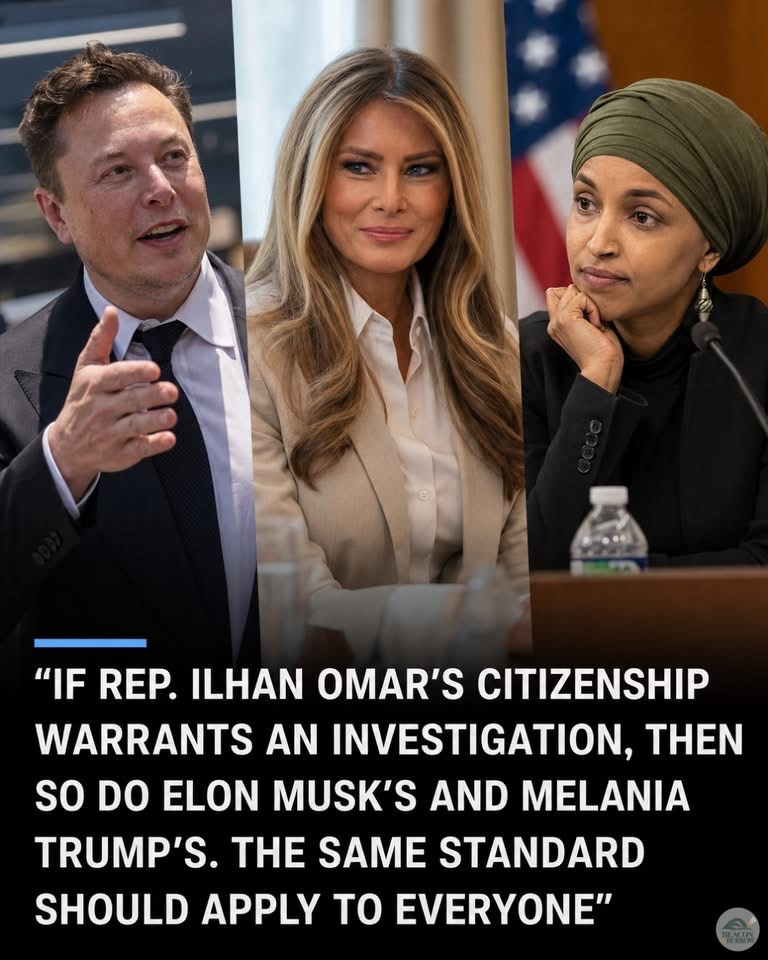
Omar, who arrived in the United States in March 1995 after fleeing Somalia's civil war, was naturalized at age 17 in 2000. She has repeatedly denied allegations of immigration fraud that first surfaced in 2016. In recent weeks, agents with Homeland Security Investigations executed a search warrant at her Washington, D.C. home as part of an ongoing federal criminal investigation. Tom Homan, the White House border czar, told Fox News that authorities were examining allegations tied to claims of a sham marriage.
Yet the citizenship histories of other prominent figures who have also naturalized—Elon Musk, born in South Africa and naturalized as an adult, and Melania Trump, naturalized in 2006 a year after marrying Donald Trump—have not triggered similar federal scrutiny.
The disparity raises a fundamental question about equal application of the law. Either citizenship is a matter serious enough to warrant federal investigation across the board, or it isn't. Selective enforcement based on political alignment or public profile suggests something other than principle is at work.
Omar has said she will not be silenced by what she calls a campaign of lies and smears, and remains on the ballot for reelection to Minnesota's 5th Congressional District in November.
Why would you want to deport Elon Musk?A federal investigation into Representative Ilhan Omar's citizenship has prompted a straightforward question: If the standard applies to her, does it apply to everyone?
Omar, who arrived in the United States in March 1995 after fleeing Somalia's civil war, was naturalized at age 17 in 2000. She has repeatedly denied allegations of immigration fraud that first surfaced in 2016. In recent weeks, agents with Homeland Security Investigations executed a search warrant at her Washington, D.C. home as part of an ongoing federal criminal investigation. Tom Homan, the White House border czar, told Fox News that authorities were examining allegations tied to claims of a sham marriage.
Yet the citizenship histories of other prominent figures who have also naturalized—Elon Musk, born in South Africa and naturalized as an adult, and Melania Trump, naturalized in 2006 a year after marrying Donald Trump—have not triggered similar federal scrutiny.
The disparity raises a fundamental question about equal application of the law. Either citizenship is a matter serious enough to warrant federal investigation across the board, or it isn't. Selective enforcement based on political alignment or public profile suggests something other than principle is at work.
Omar has said she will not be silenced by what she calls a campaign of lies and smears, and remains on the ballot for reelection to Minnesota's 5th Congressional District in November.View attachment 41840
Elon is a huge asset to the US in many ways. Just economically he directly employs 100,000 people here. His technological advancements are an immeasureable benefit to the US. Elon has more than earned his citizenship.
On the flip side, Ilhan is a likely a net drain on our society. In fact, she has stated in her own words that her allegiance is first to Somalis and second to Muslims.
Chelsea dad g09
SILVER
When ones entire personal identity is their political belief, any pragmatic view feels like a personal attack to them.Why would you want to deport Elon Musk?
Elon is a huge asset to the US in many ways. Just economically he directly employs 100,000 people here. His technological advancements are an immeasureable benefit to the US. Elon has more than earned his citizenship.
On the flip side, Ilhan is a likely a net drain on our society. In fact, she has stated in her own words that her allegiance is first to Somalis and second to Muslims.
And hes a hypocrite and this is whataboutism that he always bellows about.